Skip to content
UW Madison Crest

Dairy

Division of Extension

  • HPAI
  • Topics
    • Animal Welfare & Herd Health
    • Emerging Technologies and Facilities
    • Feed and Nutrition
    • Heat Stress
    • Milk Quality and Milking Systems
    • Reproduction and Genetics
  • Events
  • News
  • Dairy Programs
    • Badger Dairy Insight
    • El “Break” Info-Lechero
    • Four-State Nutrition and Management Conference
    • Midwest Manure Summit
    • Milk Quality from the Udder World: Trainer Certification Program
  • Articles
  • Newsletters
    • Dairy Newsletter
    • Bovi-Noticias
  • People
  • About
    • About the Dairy Program
    • Our Impacts
    • Sign-up for the Dairy Program Newsletter
  • Contact Us
Search
University of Wisconsin-Extension

Emerging Technologies and Facilities

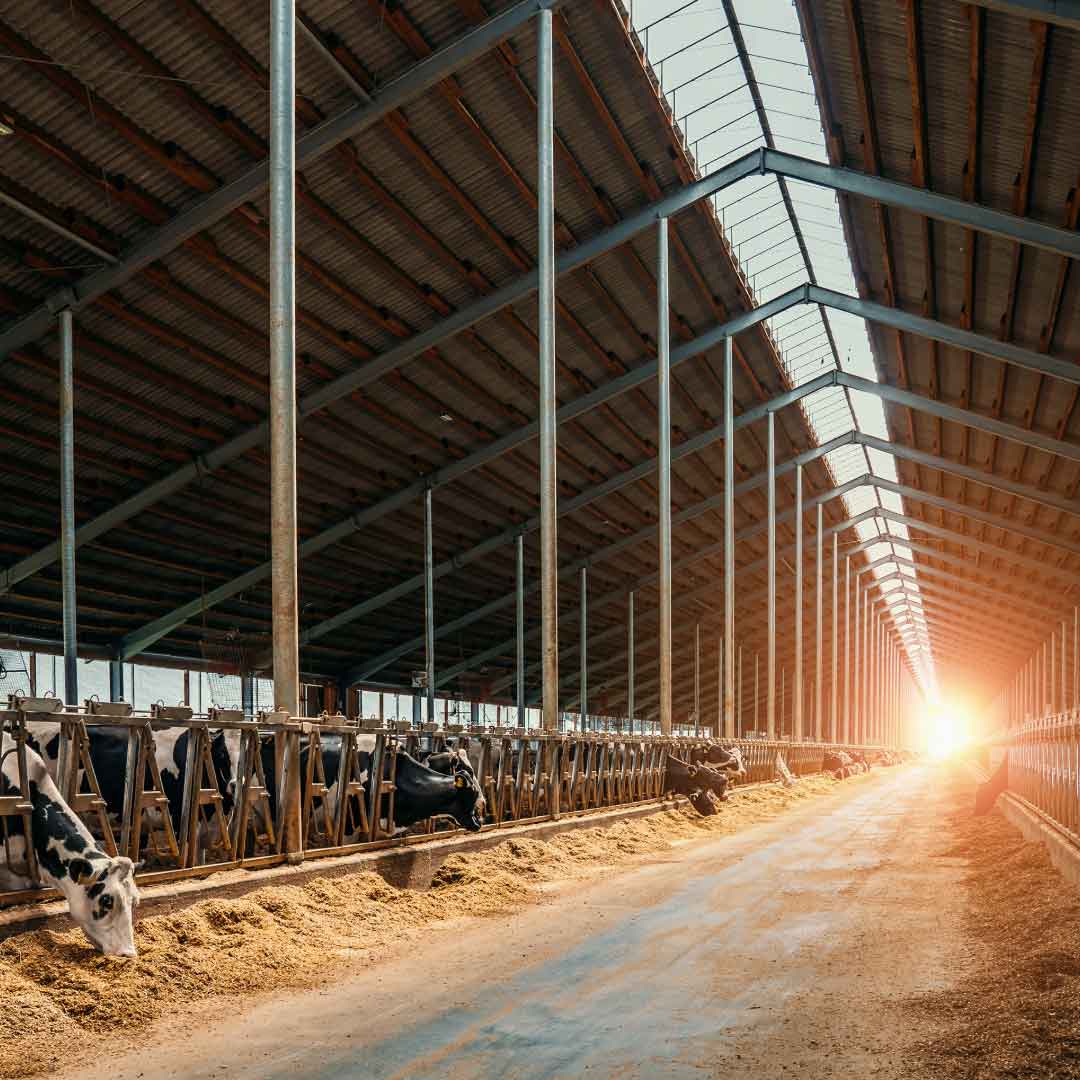
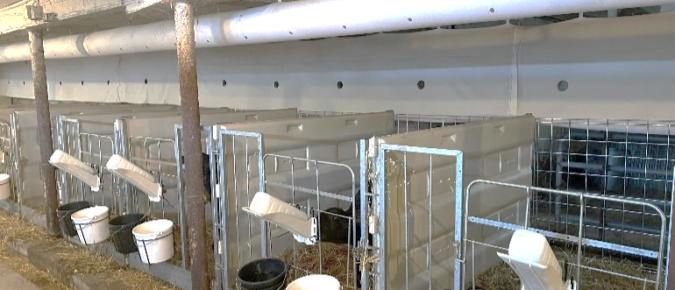
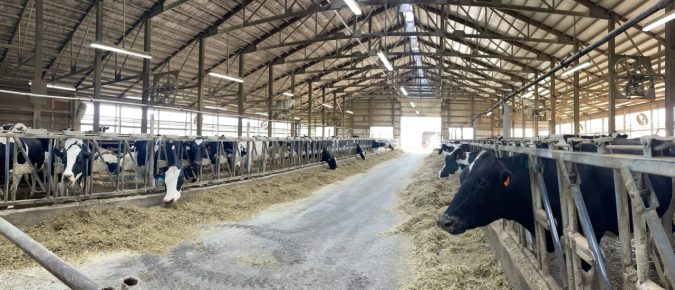
Emerging Technologies and Facilities provide animal comfort and express the genetic potential of the herd to produce milk at a profit. The range of project investments is large. One farm may need to remodel a building for calves while another farm needs a new barn and parlor.


Focus your search

Emerging Technologies
Facilities
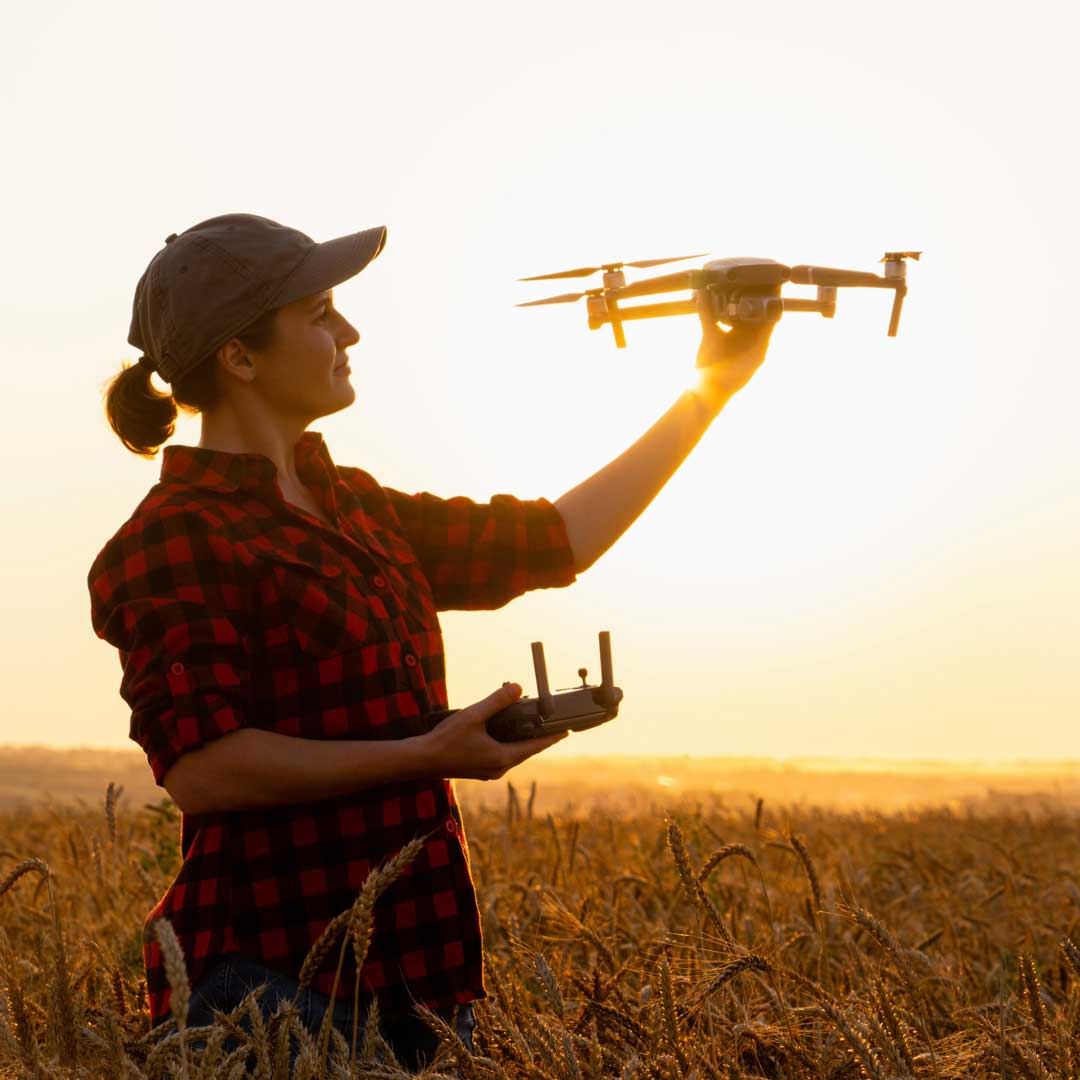
A farmer stands in a field of wheat holding a flying drone above head level.
Embracing Technology in Farming
(UW-Madison Extension Farm Management Program) ↗️


Visit the UW-Madison School of Veterinary Medicine’s: Dairyland Initiative
Visit the UW-Madison College of Agricultural & Life Sciences Smart Farm Hub

Articles

▶️ Watch: Manure processing technologies

▶️ Watch: Manure processing technologies

In this video Rebecca Larson, Professor and Extension Specialist in the Nelson Institute for Environmental Studies at the University of Wisconsin-Madison will talk about manure processing systems.

Use footbaths in an automated milking system to lower fetchings 

Use footbaths in an automated milking system to lower fetchings 

While all the data points of information at our fingertips to monitor is a positive, there are still areas to improve when it comes to animal health and Automated Milking Systems (AMS), particularly for hoof health.

Ventilation in Dairy Buildings

Ventilation in Dairy Buildings

Ventilation is an important part of managing a dairy barn for maintaining air quality, removing heat and moisture, and providing a comfortable environment for dairy cattle. There are typically three types of ventilation systems used in dairy buildings: natural, mechanical, or a combination of the two.

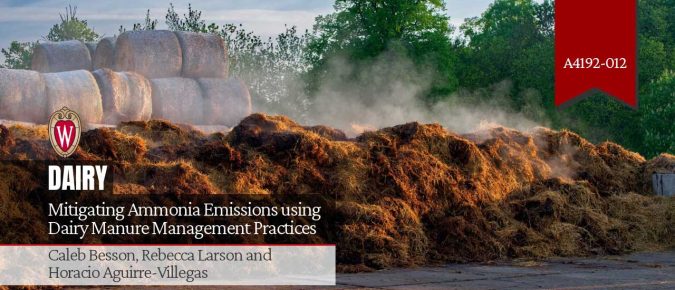
Mitigating Ammonia Emissions using Dairy Manure Management Practices (A4192-012)

Mitigating Ammonia Emissions using Dairy Manure Management Practices (A4192-012)

Ammonia emissions from agriculture can be mitigated using management practices to reduce impacts to human health and the environment.

Treating manure to produce clean water

Treating manure to produce clean water

Manure can be used in a sustainable manner by returning nutrients to the soil to grow crops that feed animals. However, on many livestock farms, manure poses operational, economic, and environmental constraints. Managing manure every day requires labor and money. Losses of manure constituents from the system result in negative environmental impacts such as degrading water and air quality.

Struvite recovery from manure

Struvite recovery from manure

Phosphorus is an important mineral added to animals’ diets and is critical to their development and growth. However, much of the phosphorus is excreted and ends up in manure. For many crops, if manure is applied at the rate needed for nitrogen, too much phosphorus is applied, which may lead to a buildup of excess phosphorus in soils. Phosphorus buildup can lead to increased phosphorus loss and the resulting environmental consequences. If manure is applied to meet crop phosphorus needs, supplemental nitrogen application is required.

Systems approach to managing manure using coordinated markets

Systems approach to managing manure using coordinated markets

Livestock produce high protein sources of food, but they also produce manure. When used effectively, manure can provide a sustainable source of fertilizers, energy, and other valuable products. However, when not managed effectively, manure components including nutrients, organic matter, and pathogens can be lost to the environment causing negative environmental impacts.

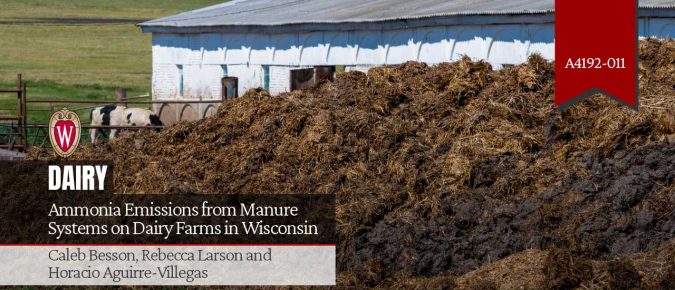
Ammonia Emissions from Manure Systems on Dairy Farms in Wisconsin (A4192-011)

Ammonia Emissions from Manure Systems on Dairy Farms in Wisconsin (A4192-011)

Preventing new mastitis cases and treating existing cases is essential to excellent milk quality.


Sources and Impacts of Ammonia Emissions (A4192-010)

Sources and Impacts of Ammonia Emissions (A4192-010)

Ammonia emissions are predominantly released from human activities. Agricultural activities are the major contributor to ammonia emissions, particularly from livestock manure and fertilizer application. Ammonia can affect human health or form other substances, such as particulate matter, that have negative health and environmental impacts.

Composting Animal Manure

Composting Animal Manure

Publication ID: A4192-005/AG-919-05 Composting Animal Manure (A4192-005/AG-919-05) Introduction Technology Basics Performance Cost Environmental Benefits and Trade-Offs Return to Top Introduction Composting is the process in which microorganisms degrade organic feedstocks in a controlled manner to produce a high quality, stable product that can be used as fertilizer. Composting is a process that can be implemented […]

Biochar Production through Slow Pyrolysis of Animal Manure

Biochar Production through Slow Pyrolysis of Animal Manure

Discover how biochar transforms agricultural waste into “black gold.” This carbon-rich soil amendment boosts crop yields, sequesters carbon, and slashes greenhouse gas emissions—all while protecting groundwater from harmful leaching. Learn why biochar is the ultimate tool for sustainable soil health.

Screw Press Separation of Manure (A4192-002/AG-919-02)

Screw Press Separation of Manure (A4192-002/AG-919-02)

Screw press separators can be used to separate manure into a solid and liquid fraction.

Posts navigation

Posts pagination

◄ Page 1 Page 2 Page 3 Page 4 ►

Division of Extension

Connecting people with the University of Wisconsin

  • Agriculture
  • Community Development
  • Health & Well-Being
  • Families & Finances
  • Natural Resources
  • Positive Youth Development

Agriculture at Extension

  • Agriculture Water Quality
  • Crops and Soils
  • Farm Management
  • Horticulture
  • Livestock

Questions?

Contact us at dairy@extension.wisc.edu

Dairy Newsletter

Stay up to date on the latest information and upcoming programs from Extension Dairy, sign up for our newsletter.

Sign up now.

University of Wisconsin-Madison      |        Explore Extension: Agriculture Community Development Families & Finances Health Natural Resources Youth
Connect With Us
Support Extension
Extension Home

We teach, learn, lead and serve, connecting people with the University of Wisconsin, and engaging with them in transforming lives and communities.

Explore Extension »

County Offices

Connect with your County Extension Office »

Map of Wisconsin counties
Staff Directory

Find an Extension employee in our staff directory »

staff directory
Social Media

Get the latest news and updates on Extension's work around the state

facebook iconFacebook

twitter icon Follow on X


Facebook
Follow on X

Feedback, questions or accessibility issues: info@extension.wisc.edu | © 2026 The Board of Regents of the University of Wisconsin System
Privacy Policy | Non-Discrimination Statement & How to File a Complaint | Disability Accommodation Requests

The University of Wisconsin–Madison Division of Extension provides equal opportunities in employment and programming in compliance with state and federal law.