This webinar presented a systems-based approach to transforming mortality management into a consistent five-pillar process: confirm, move, dispose, document, and monitor.
En este webinar se presentó un enfoque sistémico para transformar el manejo de bajas en un proceso consistente de cinco pilares: confirmar, mover, disponer, documentar y supervisar.
Dr. Barragan discussed the latest preventive strategies for common diseases during the transition period, and even during the dry-off period, including hypocalcemia, ketosis, mastitis, and metritis.
En este webinario el Dr. Barragan discutió las estrategias preventivas más actuales para enfermedades comunes durante el periodo de transición, e incluso durante el secado, como la hipocalcemia, la cetosis, la mastitis y la metritis.
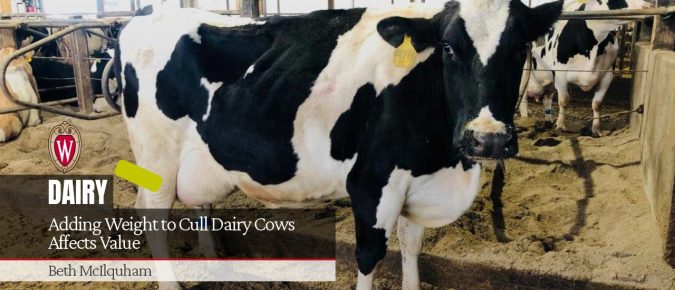
Proactive cull cow management boosts dairy farm income and animal welfare, while finish-feeding thin cows improves meat quality and profit.
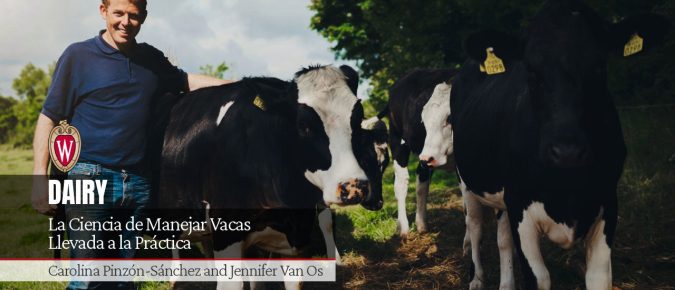
El manejo bovino de bajo estrés protege a los trabajadores, reduce el miedo de los animales, aumenta la producción de leche y utiliza principios sensoriales como la zona de fuga y el punto de equilibrio.
The transition period is one of the most challenging times for dairy cows, in which they experience several physiological and behavioral stressors. These challenges can be detrimental to cows’ success on the dairy and their welfare.
Low-stress cow handling protects workers, reduces animal fear, boosts milk yield, and uses sensory principles like flight zones and point of balance.
Learn how Wisconsin dairy teams and vets use teamwork to improve farm efficiency, employee relationships, and cow health.
Research-based strategies to improve dairy cattle health, welfare, and marketability through proactive herd management and animal care standards.
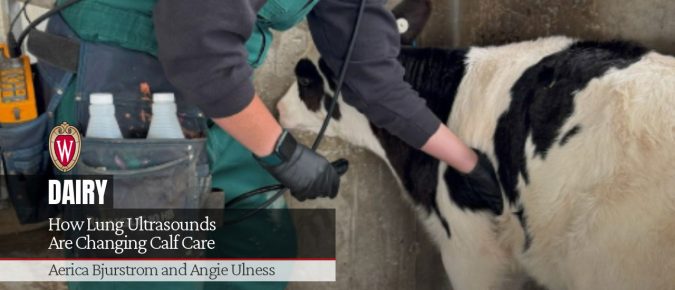
Dr. Theresa Ollivett, Associate Professor at the University of Wisconsin–Madison School of Veterinary Medicine, dives into the hidden challenges of respiratory disease in young dairy calves.
By looking beyond visible symptoms, this technology equips farms with the insights needed to make proactive, data-driven decisions that support long-term calf health, productivity, and welfare.




![Managing Animal Mortalities with Respect, Compliance, and Responsibility [Video] ▶️](https://dairy.extension.wisc.edu/files/2026/10/El-Break-Info-lechero-2026-6-Mariana-Guerra-EN-675x290.jpg)
![Manejo de mortalidades con respeto, cumplimiento y responsabilidad [Video] ▶️](https://dairy.extension.wisc.edu/files/2026/10/El-break-info-lechero-thumbnails-Mariana-Guerra-ES-675x290.jpg)
![Preventing, Monitoring, and Managing Diseases During the Transition Period [Video] ▶️](https://dairy.extension.wisc.edu/files/2026/09/2026-el-break-09-23-EN-675x290.jpg)
![Prevención, Monitoreo y Tratamiento de Enfermedades durante el Periodo de Transición [Video] ▶️](https://dairy.extension.wisc.edu/files/2026/09/2026-el-break-09-23-ES-675x290.jpg)
![Setting Transition Cows Up for Success [Video] ▶️](https://dairy.extension.wisc.edu/files/2026/07/BDI-08-2026-Setting-Transition-Cows-Up-For-Success-675x290.jpg)
![Voices from Across Wisconsin, Workplace Dynamics and Herd Health [Video] ▶️](https://dairy.extension.wisc.edu/files/2026/04/BDI-May-2026a-675x290.jpg)
![A Clearer Picture: Using Ultrasound to Detect Calf Respiratory Issues [Video] ▶️](https://dairy.extension.wisc.edu/files/2026/01/BDI-Feb-2026-675x290.jpg)