Introduction
Transport to market is an integral part of the dairy industry’s supply chain, connecting farms to processors and consumers. Each step in the transport process affects animal welfare, product quality, and farm profitability. Proper management throughout the animal’s life and sound decisions at the time of sale and during transport help ensure that market cows arrive in optimal condition. This supports both economic sustainability and public trust in dairy production.
Wisconsin’s supply chain landscape
Wisconsin is uniquely positioned in the beef industry due to the scale of its dairy industry, the abundance of marketable cattle, the geographic distribution of the state’s dairy sector, and available capacity for cattle harvest. Unlike states dominated by cow-calf or feedlot operations, Wisconsin’s beef industry relies heavily on dairy cattle to fill market needs, particularly cows and bulls that enter the beef market at the end of their productive lives.
Wisconsin has multiple major beef processors that harvest cows and bulls. While these processors are located around the state, it should not be assumed that Wisconsin cows and bulls will always be harvested in-state. While Wisconsin is home to many large dairies, most farms are small to mid-sized and often ship individual cattle or small groups to local sale barns or reloads for pooling before shipping larger groups to in-state and out-of-state harvest facilities. Along the way, the cows may be unloaded, reloaded, and mixed with other cattle several times, sometimes for many hours. This makes clear, consistent decisions about transport fitness especially important for protecting animal welfare and reducing the risk of costly condemnations.
Rethinking market cows vs. cull cows
According to Right Way. Right Time. A Guide to Cull Dairy Cattle Management (RWRT) and based on USDA dairy cow inventories and commercial slaughter numbers, the industry has an average culling rate of 32.6%. Although the term “cull cow” is commonly used in the livestock industry, these animals are economically valuable and are more accurately described as market cows, reflecting their contribution to farm profitability and human food. Market slaughter cows comprise around 8% of a dairy operation’s annual gross income. As beef prices continue to rise, carefully managing these animals throughout their lifetimes has become an increasingly important contributor to farm profitability. Ensuring that cattle are healthy, conditioned, and well-managed at the time of transport supports animal welfare and compliance with industry standards. This practice ultimately helps producers capture the full value of each market cow.
Management through the lifetime
Determining if a cow is fit for transport starts long before it ever gets on the trailer. This includes managing the animal throughout its life. RWRT states that, “If the animal’s health is maintained throughout its lifetime, the cow will have better welfare and financial outcome when it is time to be culled from the herd.”
Managing the herd effectively is a whole-farm effort that involves veterinarians, managers, and animal caretakers working together. Calm, low-stress handling supports healthy cattle and better marketing decisions. Together, these practices protect animal welfare, the farm’s reputation, and the safety of the food supply.
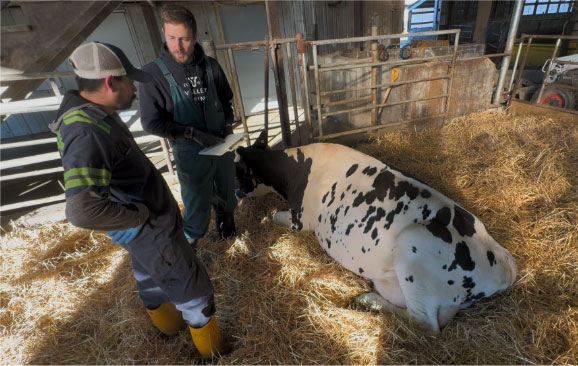
Market cows contribute meaningful income to the farm, and decisions made regarding their daily care, body condition, and health treatments, as well as the timing of removal from the herd, directly influence their quality when marketed. When all members of the farm team communicate effectively and follow sound management and transport practices, producers can protect both animal well-being and the economic value of every cow sent to market.A valid Veterinarian Client Patient Relationship (VCPR) is essential for maintaining herd health, supporting welfare, and protecting farm profitability. Through a VCPR, a veterinarian can diagnose and treat animals, prescribe medications, develop treatment and vaccination protocols, guide antimicrobial stewardship, assist with proactive culling decisions, and issue necessary documents such as Certificates of Veterinary Inspection (Image 1). Both the Farmers Assuring Responsible Management (FARM) and Beef Quality Assurance (BQA) programs require a VCPR as the foundation for responsible livestock care, ensuring that drug use, withdrawal times, and herd health plans follow science-based, veterinarian-approved practices that support animal well-being and beef product integrity.
RWRT outlines several key principles recommended by BQA and National Dairy FARM programs that help producers maintain healthy cows and promote responsible care.
Animal Health Products
Judicious use of animal health products (AHP) is a key step in farm management that helps ensure that food products from animals sent to harvest are safe and healthy for consumers. Animal health products should only be used as prescribed (including route of administration, dosage, frequency, withdrawal period, and storage requirements) or under veterinary direction when extra-label use is necessary. RWRT states that animal health products are not “management in a bottle,” but tools that support broader herd health goals.
Injection Location
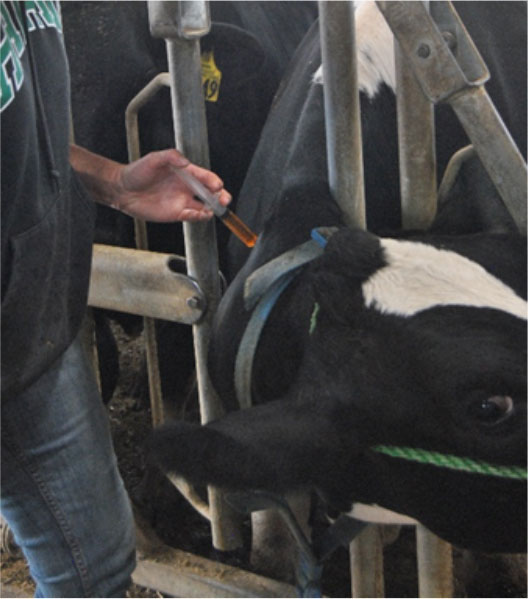
Injection-site lesions remain a concern in dairy cattle carcasses, with a Colorado State University study reporting lesions in 60% of dairy cows, primarily in the rear legs. When administering injections, it is essential to read the label carefully. Deviating from the recommended route of administration, e.g., administering an AHP intramuscularly when it should be given intravenously, can alter the withdrawal period and effectiveness. Administer intramuscular injections in the neck, within the injection triangle (Image 2).
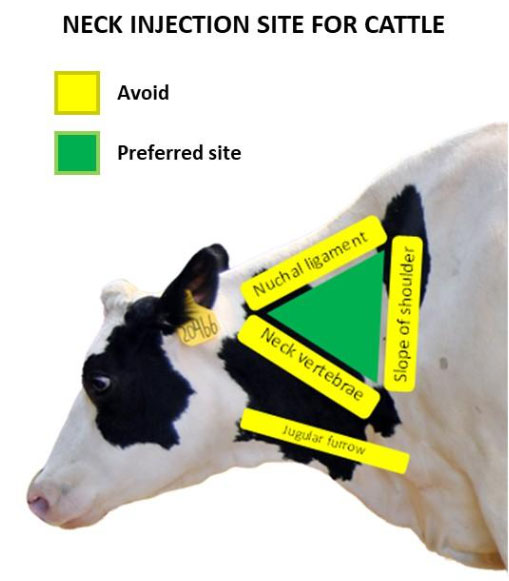
The injection triangle is a recommended area on the side of a cow’s neck where injections should be administered to protect meat quality. This triangular region is in front of the shoulder, behind the ear, below the top of the neck (nuchal ligament), and above the cervical vertebrae. Using this site helps reduce the risk of injection site damage in high-value cuts of meat, making it the preferred location for both animal health and carcass quality. (Image 3).
Record Keeping
Accurate record-keeping is essential on a dairy, ensuring that no cow is marketed without complete and reliable treatment information. Thorough, timely records support herd health, guide management decisions, control costs, and protect food safety by documenting all treatments, dosages, and withdrawal times, with documentation retained for at least two years. On-farm drug records are acceptable to FARM, the FDA, and the USDA in paper and/or electronic formats, provided they are legible, properly maintained, and readily available for review.
Withdrawal Period
The withdrawal period is the required time between an animal’s final treatment and when it can be harvested for meat or have its milk sold. It is the producer’s responsibility to maintain accurate records and follow these timelines to prevent drug residues in meat and milk. All AHPs, which include antibiotics, vaccines, and dewormers, have withdrawal periods. Any extra-label (off-label) use prescribed by a veterinarian can change those timelines, so every cow must be verified as residue-free before marketing for beef.
Drug Residues
At all federally inspected slaughter plants, the USDA Food Safety and Inspection Service (FSIS) tests cattle for drug residues as part of the National Residue Program. Producers whose animals fail residue tests may be placed on the USDA Repeat Violator List, resulting in increased testing, greater regulatory scrutiny, and potentially severe consequences, including restrictions on marketing cattle.
To prevent violations, producers should work closely with their veterinarian to establish clear treatment protocols, use medications correctly, strictly follow withdrawal times, and maintain accurate treatment records to ensure no animal is shipped before its withdrawal time is completed.
Treat, delay, or euthanize
Considerations regarding when cattle should be shipped should be carefully evaluated. It is important to realistically assess an animal’s ability to endure transport. Critically evaluating cattle prior to shipping is a step in their productive life, and making proactive decisions before transport can improve animal welfare, meat quality, and consumer confidence.
The following table (Table 1) is adapted from the fitness-to-travel recommendations of the American Association of Bovine Practitioners. Every animal marketed for harvest should be evaluated individually for fitness to withstand transport.
| Is the condition present in the animal being evaluated? | ||
|---|---|---|
| Condition | Yes | No |
| Is the udder distended? | Do not ship – milk right before shipping | OK to ship |
| Was the cow milked right before shipping? | ✅ OK to ship | ❌ Do not ship – milk right before shipping |
| Does the cow have ambulatory issues? | ❌ Do not ship – allow to recover on farm or euthanize | ✅ OK to ship |
| Does the cow have cancer eye or blindness? | ❌ Do not ship – euthanize | ✅ OK to ship |
| Does the cow have a fever greater than 103°F? | ❌ Do not ship – allow to recover on farm or euthanize | ✅ OK to ship |
| Does the cow have potential drug residues (still within drug withdrawal or withhold period)? | ❌ Do not ship – wait until withdrawal or withhold period has passed | ✅ OK to ship |
| Does the cow have peritonitis? | ❌ Do not ship – allow to recover on farm or euthanize | ✅ OK to ship |
| Does the cow have leg fractures or severe lameness (4 or 5 on 5-pt scale)? | ❌ Do not ship – allow to recover on farm or euthanize | ✅ OK to ship |
| Does the cow have an unreduced prolapse? | ❌ Do not ship – allow to recover on farm or euthanize | ✅ OK to ship |
| Is the cow currently calving or has a high likelihood of calving during transport? | ❌ Do not ship – allow to calve on farm or euthanize | ✅ OK to ship |
| Does the cow have suspected nervous system symptoms? | ❌ Do not ship – allow to recover on farm or euthanize | ✅ OK to ship |
| Does the cow have any visible open wounds? | ❌ Do not ship – allow to recover on farm or euthanize | ✅ OK to ship |
Looking forward
Market or cull cattle are valuable assets to dairy operations and should be managed and treated with the same care and management as the rest of the herd. Although culling criteria may vary among farms based on individual goals and management systems, the commitment to animal welfare should remain consistent across all operations. Upholding a high standard of welfare in cull and market cattle not only supports ethical livestock care but also protects animal well-being, product quality, and public trust in the dairy industry.
References
- American Association of Bovine Practitioners. (2019, August). Transportation and Fitness-to-Travel Recommendations for Cattle. https://www.aabp.org/Resources/AABP_Guidelines/transportationguidelines-2019.pdf.
- National FARM Program. (retrieved 9 October 2025). Right Way. Right Time. https://nationaldairyfarm.com/wp-content/uploads/2025/10/Right-Way-Right-Time.pdf
- Roeber, D. L., M. D. Mies, C. D. Smith, K. E. Belk, T. G. Field, J. D. Tatum, J. A. Scanga, and G. C. Smith (2002). Frequencies of injection-site lesions in muscles from rounds of dairy and beef cow carcasses. Journal of Dairy Science 85(3):532–536.
https://www.journalofdairyscience.org/article/S0022-0302(02)74105-2/pdf
Published: April 2026
Reviewers:
- Jennifer Van Os, PhD, Associate Professor and Dairy Animal Welfare Extension Specialist at the University of Wisconsin–Madison, Division of Extension
- Dan Schaefer, PhD, Emeritus Professor – Nutrition at the University of Wisconsin–Madison
Author:
- Aerica Bjurstrom, Regional Dairy Educator at the University of Wisconsin–Madison, Division of Extension Kewaunee County