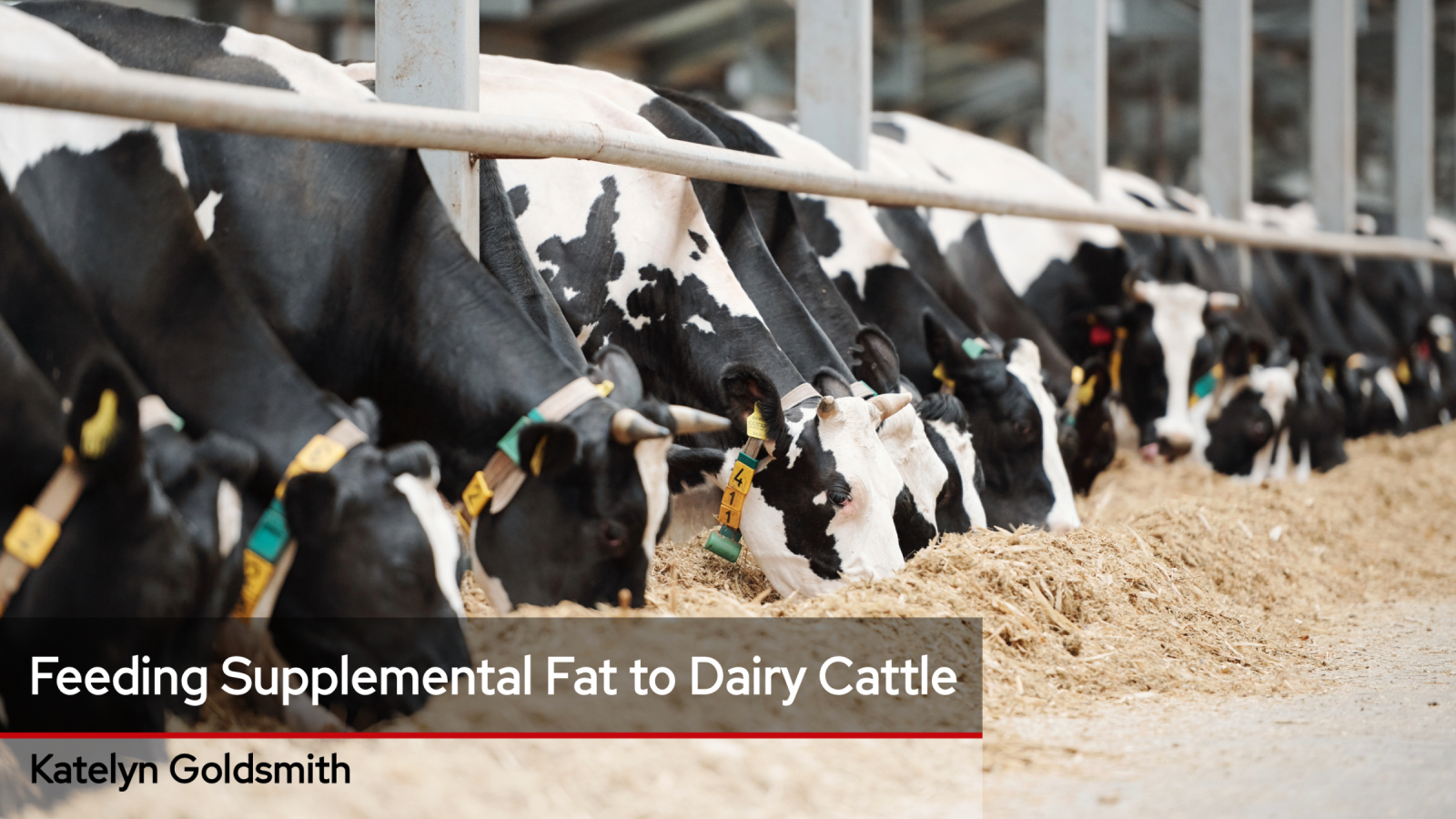
Fat is a common, energy-dense nutrient for dairy cattle. While many ration ingredients contribute to the fat content of the diet, feeding supplemental sources of fatty acids can positively influence milk yield, milk composition, and reproductive performance of dairy cattle. As a result, supplemental fat feeding is a common strategy used by dairy farmers and their nutritionists.
However, not all fats behave the same, and cows do not respond to all fatty acids equally. Understanding the fatty acid profile of a supplement and how cows respond to those fatty acids can help fine-tune diets. This article describes why fatty acid profiles matter, summarizes cow responses to different fatty acids, and provides approaches to feeding supplemental fat.
Why are Fatty Acid Profiles Important to Dairy Cows?
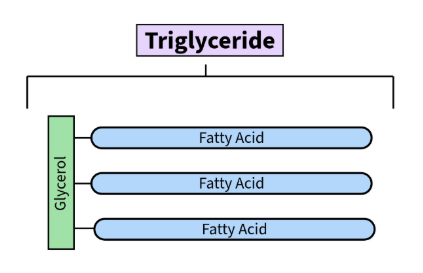
“Fat” is a general term describing compounds made primarily of fatty acids. Similar to how amino acids serve as the building blocks of proteins, fatty acids are the building blocks of fats. Triglycerides, the most common form of fat, have three fatty acid tails attached to a glycerol backbone. Fatty acids can differ from one another in chain length, degree of saturation (number of double bonds), melting point, and digestibility. These characteristics influence how a specific fatty acid is digested and utilized by the cow.
For an example of how these differences can influence dairy cattle nutrition, polyunsaturated fatty acids (PUFAs), which are naturally present in many feeds like whole soybeans or high-moisture corn, can be toxic to fiber-digesting bacteria. Rumen microbes normally convert these PUFAs into saturated fatty acids through a process known as biohydrogenation. But when the system is overloaded, the rumen microbes use alternative biohydrogenation pathways which produce intermediates that can depress milk fat synthesis. For this reason, it is generally ideal to avoid feeding excessive amounts of polyunsaturated fatty acids to dairy cattle.
This illustrates how focusing on the fatty acid profile of feed and supplements can allow diets to be formulated more precisely to support cow performance.
Common Supplemental Fatty Acids Fed to Dairy Cattle
Palmitic (C16:0), stearic (C18:0), and oleic (C18:1) fatty acids are the most commonly researched and available in commercial products. These fatty acids are the most abundant long-chain fatty acids present in milk fat and adipose tissue of dairy cows, making them strong candidates for supplementation (1).
Palmitic Acid (C16:0)
Palmitic acid (PA) is one of the most studied supplemental fatty acids. Across multiple trials, feeding PA to dairy cattle has consistently improved milk fat yield, energy-corrected milk (ECM) yield, and nutrient utilization across lactation (1). These consistent responses make palmitic acid a popular base for many commercial fat supplements.
When considering specific groups of animals, there are some considerations to keep in mind.
- Early-lactation cows can experience both greater body weight and body condition loss when fed high-palmitic supplements. This can make high-palmitic supplements less ideal for supplementing to fresh cows (2).
- Cows producing less than approximately 100 lbs of milk per day tend to respond best to fat supplements containing higher proportions of palmitic acids. Higher producing cows (approx. >100 lbs/d) may respond better to slightly lower levels of palmitic acids and higher levels of oleic acids (3,4).
For these reasons, palmitic-rich supplements (>60% PA) are particularly well-suited for mid- to late-lactation cows since they generally maintain body condition more easily and benefit from PA’s ability to support milk fat and ECM as production gradually declines post-peak.
Oleic Acid (C18:1)
Interest in oleic acid has grown due to both fatty acid supplementation and the introduction of high-oleic soybeans. Most oleic acid feeding trials have evaluated blends of palmitic and oleic acids rather than pure oleic acids alone.
These studies consistently show that supplements containing blends of palmitic and elevated oleic acid can improve ECM, particularly in high-producing cows (approx. >100 lbs/d) (3,4). Oleic-rich blends have shown advantages compared to high-palmitic blends for fresh cows by improving ECM while reducing body condition loss.
These results indicate that feeding elevated levels of oleic acids may be an ideal option for fresh and high-producing cows.
Stearic Acid (C18:0)
Stearic acid is the predominate fatty acid flowing from the rumen to the small intestine due to biohydrogenation (5). But supplemental stearic acid has produced inconsistent performance responses, especially when compared with palmitic or palmitic-oleic blends (1). Lower digestibility and less consistent effects on production can limit its value and as a result, most supplements contain stearic acid only as part of the broader fatty acid mixture rather than as a primary ingredient. Most supplements focus on palmitic and oleic acids as the primary ingredient.
What about Omega Fatty Acids for Dairy Cows?
Omega-3 and omega-6 fatty acids have received interest in both dairy cattle and human nutrition. The term “omega” simply refers to the position of the first double bond for that fatty acid. Among omega-6 fatty acids, linoleic acid is the primary one of interest for dairy cattle and is already abundant in many common feedstuffs. Common omega-3 fatty acids of interest for dairy cattle include a-linolenic acid (ALA), eicosapentaenoic acid (EPA), and docosahexaenoic acid (DHA). Unlike linoleic acid, these omega-3 fatty acids are far less prevalent in typical dairy diets and often must be supplied through ingredients like flaxseed, fish oil, or fatty acid supplements.
The involvement of Omega-3 fatty acids in a wide range of biological processes has sparked interest in their potential as a dietary supplement. In research trials, most production related parameters, including milk yield, milk composition, or dry matter intake, remain unchanged when omega-3 supplements are fed (6). However, multiple trials have shown that omega-3 fatty acids, particularly sources rich in ALA, may provide reproductive benefits including reductions in pregnancy loss or improved follicle development (6).
Overall, supplemental omega-3 fatty acids may support reproductive performance but are less likely to enhance production outcomes.
| Common Fatty Acids in Dairy Nutrition | |||
| Name | Common Abbreviations | Omega Class | |
| Palmitic Acid | PA | C16:0 | |
| Stearic Acid | SA | C18:0 | |
| Oleic Acid | OA | C18:1 | Omega-9 |
| Linoleic Acid | LA | C18:2 | Omega-6 |
| Linolenic Acid | ALA | C18:3 | Omega-3 |
| Eicosapentaenoic Acid | EPA | C20:5 | |
| Docosahexaenoic Acid | DHA | C22:6 | |
Feeding Recommendations
Together, dietary fatty acids from forages, grains, and byproducts typically amount to roughly 3% of diet dry matter. In general, it is recommended that lactating dairy diets do not exceed 7% of dietary dry matter as fatty acids, and less than 5% for fresh cow rations. Excessive dietary fat can reduce dry matter intake and therefore limit total energy intake, despite the additional energy from the fat (7).
The optimal amount of supplemental fat to include in a diet depends on individual farm-specific factors such as dietary fat contributions, diet formulation, level of milk production, feeding management, environment, and feed handling systems. Nonetheless, most research has focused on feeding supplemental fat at less than 3% of diet dry matter.
Targeted Fat Feeding
Over time, research has generated guidelines for targeting supplemental fatty acid profiles with cows at different stages and production levels. While exact ratios vary by study and product, the following approximate ratios offer a practical starting point. It is important to note that these suggested profiles are for supplemental fatty acids, not for the entire ration.
Fresh Cows: 60% Palmitic, 30% Oleic. Providing a moderate level of palmitic acid and increased oleic acid can support gains in ECM production while reducing body condition loss (8).
High-Producing Cows (>100 lbs/d): 60% Palmitic, 30% Oleic. High producing cows have shown positive responses to moderate levels of palmitic acid and increased oleic acid (4).
Mid- to Late-Lactation: 80% Palmitic, 10% Oleic. These post-peak cows respond well to higher levels of palmitic and lower levels of oleic fatty acid supplementation as production gradually declines through lactation (3,9).
Summary
Supplemental fats can be an effective tool for improving cow’s energy supply, milk production, and milk fat yield. However, responses vary by fatty acid type, stage of lactation, and cow performance level. Paying attention to fatty acid profiles, rather than simply adding more fat, helps ensure that supplements are used effectively and economically.
References
- Lock, A.L., dos Santos Neto, J.M., & de Souza, J. 2025. Invited review: Moving from dietary fat to fatty acids – New insights into how fatty acids affect digestibility, metabolism, and performance in dairy cows. Journal of Dairy Science, 108:11733-11756. https://doi.org/10.3168/jds.2025-27040
- de Souza, J., & Lock, A.L. 2019. Effects of timing of palmitic acid supplementation on production responses of early-lactation dairy cows. Journal of Dairy Science, 102:260-273. https://doi.org/10.3168/jds.2018-14976
- de Souza, J., St-Pierre, N.R., & Lock, A.L. 2019. Altering the ratio of dietary C16:0 and cis-9 C18:1 interacts with production level in dairy cows: Effects on production responses and energy partitioning. Journal of Dairy Science, 102:9842-9856. https://doi.org/10.3168/jds.2019-16374
- Western, M.M., de Souza, J., & Lock, A.L. 2020. Milk production responses to altering the dietary ratio of palmitic and oleic acids varies with production level in dairy cows. Journal of Dairy Science, 103:11472-11482. https://doi.org/10.3168/jds.2020-18936
- Boerman, J.P., de Souza, J., & Lock, A.L. 2017. Milk production and nutrient digestibility responses to increasing levels of stearic acid supplementation of dairy cows. Journal of Dairy Science, 100:2729-2738. https://doi.org/10.3168/jds.2016-12101
- Moallem, U. 2018. Invited review: Roles of dietary n-3 fatty acids in performance, milk fat composition, and reproductive and immune systems in dairy cattle. Journal of Dairy Science, 101:8641-8661. https://doi.org/10.3168/jds.2018-14772
- NASEM. 2021. Nutrient requirements of dairy cattle: Eighth revised edition. Washington, DC: The National Academies Press. https://doi.org/10.17226/25806
- de Souza, J., Prom, C.M., & Lock, A.L. 2021. Altering the ratio of dietary parlmitic and oleic acids affects production responses during the immediate postpartum and carryover periods in dairy cows. Journal of Dairy Science, 104:2896-2909. https://doi.org/10.3168/jds.2020-19311
- de Souza, J., Preseault, C.L., & Lock, A.L. 2018. Altering the ratio of dietary palmitic, stearic, and oleic acids in diets with or without whole cottonseed affects nutrient digestibility, energy partitioning, and production responses of dairy cows. Journal of Dairy Science, 101:172-185. https://doi.org/10.3168/jds.2017-13460