Introduction
Dairy cows do an incredible job of turning the nutrients they consume in their diets into the milk and dairy products we enjoy every day. One of those nutrients, protein, is key to their diet. Protein has several important functions. It supports growth in young animals, builds muscle, is a component of DNA, and is necessary for milk production. Protein can also be one of the largest out-of-pocket feed expenses for dairy producers. Getting protein feeding right is critical to boost both animal productivity and farm profitability. In this article, we’ll explain what protein is, how it is measured, its different types, and common feed sources.
What is Protein?
Proteins are large molecules made up of smaller units called amino acids (AAs), which serve as the building blocks of life and support many essential functions in the cow’s body. Proteins can have very different amino acid compositions between each other.
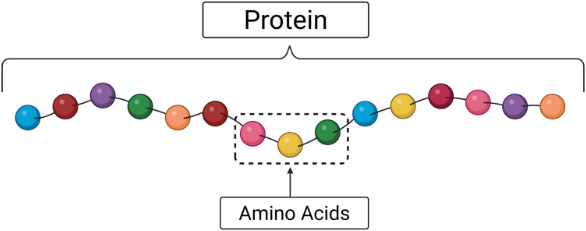
Ten out of twenty amino acids are considered essential in dairy nutrition. These essential amino acids cannot be synthesized by the cow’s body and therefore, they must be supplied through their diet. For this reason, cows do not have a protein requirement; they have an amino acid requirement. This makes it necessary to feed different sources of protein to meet the cow’s requirements.
But amino acids don’t just meet the cow’s needs, they also fuel the rumen microbial population. Amino acids contain nitrogen which is used by microbes to grow and produce their own protein – microbial protein. Microbial protein is later digested and absorbed by the cow in the abomasum and small intestine and is a major source of amino acids for the cow. Amino acids are also important for rumen microbe’s functions, allowing them to break down fiber and generate energy for the cow to use for milk production and overall health.
Types of Protein in Dairy Cattle Nutrition
Different feeds have different amounts of protein. In feed analysis, the most common measurement of protein content of a diet is expressed as crude protein (CP).
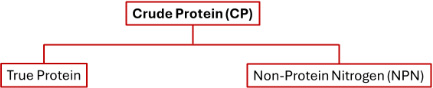
Crude protein does not directly measure the true protein content of feed but instead measures the total nitrogen content of feed. Protein is the primary source of nitrogen in feeds, making this a helpful estimate. Nitrogen from non-protein nitrogen (NPN) sources are also captured in this measurement. Non-protein nitrogen is used to describe sources of nitrogen in forms other than protein such as urea, amines, and ammonia. NPN can also be used by rumen microbes to generate microbial protein.
On average, proteins contain about 16% nitrogen. The CP value of a feed is calculated by multiplying its nitrogen content by 6.25 (100 ÷ 16 = 6.25).
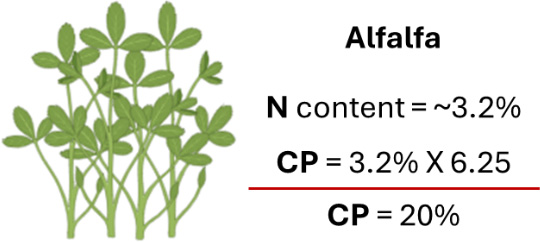
While this calculation gives a general idea of protein presence, it does not indicate how much of that protein is actually digestible or usable by the cow and its rumen microorganisms. For this reason, nutritionists have shifted their focus over time from simply measuring crude protein to understanding other measurements of protein, how much nitrogen is available for microbial synthesis in the rumen, and whether the diet provides the right amino acid profile to meet the cow’s needs.
Other Protein Measurements
Most protein measurements in dairy nutrition are expressed on a dry matter (DM) basis to standardize comparisons across feeds with different moisture levels. Learn more about this in our article Understanding Dry Matter: A Key to Better Dairy Feeding Management.
True protein is the fraction of actual protein (made of amino acids) contained in a feed (excludes NPN).
Non-protein nitrogen (NPN) are compounds such as urea, amides, amines, and ammonia which contain nitrogen but do not contain amino acids.
Rumen degradable protein (RDP) refers to the protein that can be digested by microbes in the rumen. In the diet it comes mainly from fresh forages and silage.
Rumen Undegradable Protein (RUP) is the protein that cannot be digested by microbes in the rumen. This is not a bad thing though because later they may be digested and absorbed in the abomasum and the small intestine becoming useful to the cow. Some feeds rich in RUP are fishmeal, canola-meal, and soybeans.

Soluble protein (SP) is the fraction of the RDP that is used by microbes quickly, because it dissolves fast in rumen.
Insoluble protein is protein that is less available to rumen microbes, contributing more to RUP.
Microbial protein is synthesized by rumen microbes and later digested and absorbed in the abomasum and small intestine. Microbial protein is a major source of amino acids for the cow.
Indigestible Protein escapes the rumen and the abomasum undigested and cannot be absorbed in the small intestine. It gets excreted as a waste.
Sources of Protein for Dairy Cows
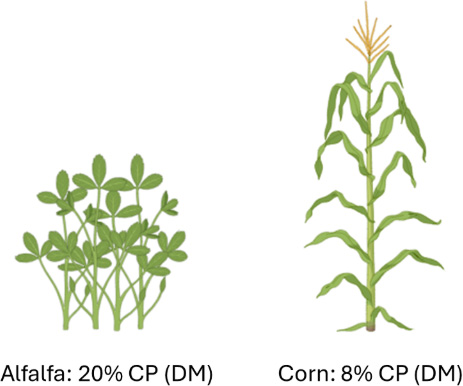
When cows graze or eat harvested forage, much of their protein comes directly from the plants they consume. However, not all forages provide equal amounts of protein. For instance, legumes such as alfalfa often contain higher amounts of CP compared to corn silage, which contains less protein but more energy.
High-protein sources for dairy cows typically come from meals made from either animal or plant products. Animal-based meals include options like blood meals and meat meals, while plant-based meals include canola meals and soybean meals. Soybean meals are especially common because soybeans are widely grown on farms. When soybeans or other beans are roasted, they become a high-quality source of RUP, which allows more of the protein to bypass the rumen and be used by the cow. Fresh grasses and forages tend to contain high levels of NPN, and even higher when they are fed in the form of hay or silage.
Sources of protein for dairy cattle diets
| High in CP (>35%DM) |
High in RDP (>50%DM) |
High in RUP (>60%DM) |
High in SP (>40%DM) |
|---|---|---|---|
|
|
|
|
Providing Too Much Protein to Dairy Cows
Cows can maintain themselves on a relatively low CP intake due to the activity of rumen microbes. If too much protein is fed, its digestion may produce more ammonia (a form of nitrogen) in the rumen than the cow can utilize. The excess ammonia is transported to the liver, where it is converted into urea and starts traveling through the bloodstream which is known as Blood Urea Nitrogen (BUN). This urea may be sent back to the rumen where it can be used by the microbes when nitrogen supplies are low. It can also be excreted through the urine or, to a lesser extent, in the milk which is known as Milk Urea Nitrogen (MUN). MUN and BUN are valuable indicators for evaluating whether dietary protein and energy are balanced in a dairy cow’s diet. Both reflect the amount of urea formed from excess ammonia in the rumen. Very excessive ammonia accumulation can be toxic and may lead to illness or even death.
Conclusion
Protein, composed of amino acids, plays a crucial role in a dairy cow’s growth, health, and milk production. In the rumen, nitrogen from both true protein and NPN is used by microorganisms to obtain microbial protein. Protein can also be classified as RDP or RUP, each serving different roles. The most common measure of protein in feeds is CP, which is calculated based on nitrogen content. However, not all proteins are utilized equally; different feeds provide varying amounts and types of protein. Feeding the appropriate type and amount of protein not only supports optimal milk yield and cow health but also reduces unnecessary costs and nutrient waste. BUN and MUN are practical indicators for assessing how effectively protein from the diet is being used.
Authors

Manuel Peña
Regional Dairy Educator
Liz Gartman, Regional Crops Educator at the University of Wisconsin–Madison Division of Extension.
Published: December 6, 2025
Reviewed by: Katelyn Goldsmith, Dairy Outreach Specialist at the University of Wisconsin–Madison Division of Extension, and Jackie McCarville, Regional Dairy Educator at the University of Wisconsin–Madison Division of Extension.
References
- Schwab, C. G., & Broderick, G. A. (2017). A 100-Year Review: Protein and amino acid nutrition in dairy cows. Journal of Dairy Science, 100(12), 10094–10112. https://doi.org/10.3168/jds.2017-13320
- Huber, J. T., & Kung, L. Jr. (1981). Protein and nonprotein nitrogen utilization in dairy cattle. Journal of Dairy Science, 64(6), 1170–1195. https://doi.org/10.3168/jds.S0022-0302(81)82695-1
- Ishler, V. A., & Becker, C. (2023, May 18). Concentrates for dairy cattle. Penn State Extension. Retrieved from https://extension.psu.edu/concentrates-for-dairy-cattle
- Amaral-Phillips, D. M. (n.d.). Are your dairy cows getting the protein they need? University of Kentucky, Department of Animal & Food Sciences. Retrieved 11/15/2025, from https://afs.mgcafe.uky.edu/content/are-your-dairy-cows-getting-protein-they-need
- Scoresby, D., Teixeira, I. A. M. A., & Chahine, M. (2025). Effects of corn silage and alfalfa hay on production and nitrogen excretion in lactating dairy cows. Nitrogen, 6(2), Article 43. https://doi.org/10.3390/nitrogen6020043
- Seglar, B. (2014, June 30). Corn silage feeding guidelines for dairy production. AgProud. Retrieved 11/15/2025, from https://www.agproud.com/articles/27256-corn-silage-feeding-guidelines-for-dairy-production