Skip to content
UW Madison Crest

Dairy

Division of Extension

  • HPAI
  • Topics
    • Animal Welfare & Herd Health
    • Emerging Technologies and Facilities
    • Feed and Nutrition
    • Heat Stress
    • Milk Quality and Milking Systems
    • Reproduction and Genetics
  • Events
  • News
  • Dairy Programs
    • Badger Dairy Insight
    • El “Break” Info-Lechero
    • Four-State Nutrition and Management Conference
    • Midwest Manure Summit
    • Milk Quality from the Udder World: Trainer Certification Program
  • Articles
  • Newsletters
    • Dairy Newsletter
    • Bovi-Noticias
  • People
  • About
    • About the Dairy Program
    • Our Impacts
    • Sign-up for the Dairy Program Newsletter
  • Contact Us
Search
University of Wisconsin-Extension

Herd Health

Biosecurity & Disease Prevention

Calving Management

Dry Cow Management

Hoof Health

Transition Cow Health

Articles

The Fresh Cow: Ketosis

The Fresh Cow: Ketosis

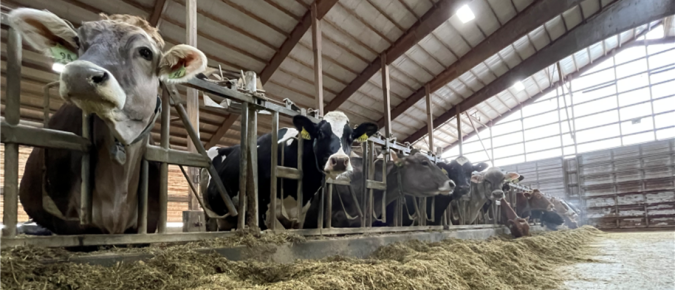
Clinical and subclinical ketosis are the most common metabolic disorder in high-producing dairy cows, costing up to $289 per case. According to the University of Wisconsin School of Veterinary Medicine, 93% of ketosis cases occur between 5 and 30 days post-calving.

Administering reproductive hormones to dairy cattle: Considerations for Safety and Beef Quality Assurance

Administering reproductive hormones to dairy cattle: Considerations for Safety and Beef Quality Assurance

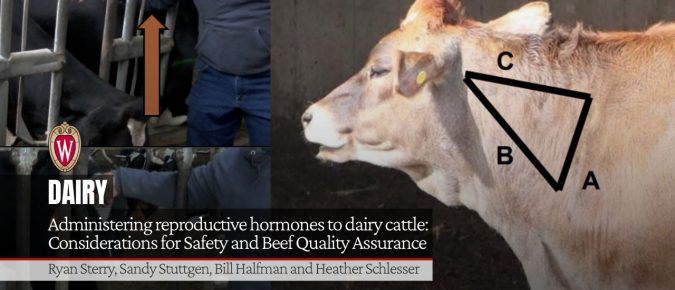
Using proper injection techniques for animal health products, including reproductive hormones, helps ensure products work effectively. In addition, it is important to safely handle animals and health products to protect both farm workers and animals.

Cleaning and sanitizing multi-dose syringes and transfer needles

Cleaning and sanitizing multi-dose syringes and transfer needles

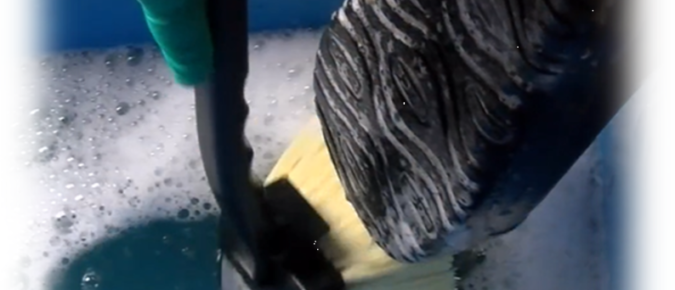
Properly cleaning, sanitizing, and storing multi-dose syringes and transfer needles will reduce contamination from many viruses, bacteria, and fungi. The steps described here use only tap and distilled or deionzed (purified) water and do not render the equipment sterile.

Animal drugs by a different name

Animal drugs by a different name

Shopping for deals and managing inventory are two ways to lower livestock drug costs. Have you ever been confused by the different brands available? How do you know which is the better buy?

Managing worms at spring turnout

Managing worms at spring turnout

Green is my favorite color. Green tree buds, lawns, and pastures signal that winter is finally over. It’s very tempting to turn young stock out onto newly green pasture. We are tired of indoor feeding and cleaning, and we have fieldwork and other chores to attend to. However, tempting as it is to open the pasture gate, first remember these worm management steps.

Fresh cows: Finding the “off” cow

Fresh cows: Finding the “off” cow

Fresh cows are the most important, and most vulnerable, group of cows in the barn. The first few weeks post-calving is the highest risk period for several diseases. Most infections, diseases, and/or metabolic disorders, such as milk fever, ketosis, retained placentas, metritis, mastitis, and displaced abomasums, or DAs, occur during this time.

Fresh cows:  Finding the sick cow

Fresh cows:  Finding the sick cow

Fresh cows have the greatest production potential in a dairy, but they are very susceptible to disease. The post-calving period is a critical time in a cow’s life for its well-being and performance. Fresh cow metabolic disorders can hinder lactation and subsequent reproductive efficiency.

Managing transition cows on the smaller farm

Managing transition cows on the smaller farm

Why is it that dairy farms in my area are averaging under the Wisconsin average of 24,884 pounds of milk per cow?  This question got me asking questions to some farmers and agri-service providers.  One piece of the puzzle that emerged is that we may need to be paying closer attention to transition cows in our smaller herds.  Care of the transition cow is not a new concept, but management strategies for the smaller farm may be overlooked when recommendations are shared.
Hoof health starts with the heifer

Hoof health starts with the heifer

Hoof health is essential for not only the overall health of the animal, but also for her welfare. Digital dermatitis (DD), or hairy heel warts, is an extremely painful condition for dairy cattle, reducing their ability to walk to and from the milking parlor, or to the feed bunk. Based on USDA NAHMS 2017 data, 16.8% of all cows and 2.6% of bred heifers have lameness on a dairy operation.

Chlorine Dioxide as a Livestock Operation Disinfectant

Chlorine Dioxide as a Livestock Operation Disinfectant

By Donald C. Sockett, DVM, MS, PHD, DACVIM (large animal); Wisconsin Veterinary Diagnostic Laboratory, UW-Madison It is important for livestock barns, calf pens, and calf feeding equipment to be properly cleaned before the disinfectant is applied. If surfaces are not properly cleaned, the disinfection step is much less effective at killing disease-causing microorganisms. Many disinfectants […]

Dry Cow Heat Stress Management

Dry Cow Heat Stress Management

Managing heat stress in dry cows is just as important as it is for lactating cows because it determines the amount of productivity and success a cow will have during her lactation. It can also influence the future success of the daughters and granddaughters of the dry cow.

Posts navigation

Posts pagination

◄ Page 1 Page 2 Page 3

Division of Extension

Connecting people with the University of Wisconsin

  • Agriculture
  • Community Development
  • Health & Well-Being
  • Families & Finances
  • Natural Resources
  • Positive Youth Development

Agriculture at Extension

  • Agriculture Water Quality
  • Crops and Soils
  • Farm Management
  • Horticulture
  • Livestock

Questions?

Contact us at dairy@extension.wisc.edu

Dairy Newsletter

Stay up to date on the latest information and upcoming programs from Extension Dairy, sign up for our newsletter.

Sign up now.

University of Wisconsin-Madison      |        Explore Extension: Agriculture Community Development Families & Finances Health Natural Resources Youth
Connect With Us
Support Extension
Extension Home

We teach, learn, lead and serve, connecting people with the University of Wisconsin, and engaging with them in transforming lives and communities.

Explore Extension »

County Offices

Connect with your County Extension Office »

Map of Wisconsin counties
Staff Directory

Find an Extension employee in our staff directory »

staff directory
Social Media

Get the latest news and updates on Extension's work around the state

facebook iconFacebook

twitter icon Follow on X


Facebook
Follow on X

Feedback, questions or accessibility issues: info@extension.wisc.edu | © 2026 The Board of Regents of the University of Wisconsin System
Privacy Policy | Non-Discrimination Statement & How to File a Complaint | Disability Accommodation Requests

The University of Wisconsin–Madison Division of Extension provides equal opportunities in employment and programming in compliance with state and federal law.