The focus point of any herd health program should be on the early detection of sick fresh cows. More than 35% of all dairy cows have at least one clinical infectious disease or metabolic disorder during the first 90 days, which can be costly to the farmer.
Clinical and subclinical ketosis are the most common metabolic disorder in high-producing dairy cows, costing up to $289 per case. According to the University of Wisconsin School of Veterinary Medicine, 93% of ketosis cases occur between 5 and 30 days post-calving.
What is ketosis
Ketosis is a metabolic disorder that typically occurs within the first two weeks post-calving. It is a sign a fresh cow is not getting enough energy from the diet, either from the ration itself or from depressed, or reduced, feed intake.
After calving, the cow’s energy demand increases substantially as she begins producing milk for her next lactation. Oftentimes ketosis is caused by a negative energy balance, either because the diet is lacking energy or the cow is not consuming enough. The cow’s body will begin to utilize its own fat reserves for energy to fulfill the energy needed to sustain the level of production.
When a cow‘s body senses there is not enough glucose (or energy) in the blood, the liver breaks down body fat to form non-esterified fatty acids, or NEFAs, as an alternative energy source. These fatty acids are further broken down by the liver to create ketone bodies. Even though ketones can be a source of energy, if the body fat is mobilized faster than the liver can metabolize it, a buildup of too many ketones occurs in the blood. The build-up of ketone bodies in the blood, called ketosis, is toxic and makes the cow sick.
Since ketosis tends to be a common concurrent disease with displaced abomasums, retained placentas, and metritis, we can look at ketosis as a symptom of another fresh cow problem that warrants further examination.
Risks for ketosis
Cows with excessive fat stores, or a body condition score higher than 3.75 at the time of calving are at a higher risk for ketosis.
Many risk factors are associated with reduced feed intake, either due to limited feed bunk space or reduced appetite due to sickness. Additionally, inflammation from infection such as mastitis, metritis, or lameness, or even inflammation from calving can cause the cow to utilize more blood glucose than normal, which can also lead to ketosis.
Symptoms
Key clinical, or visible, symptoms of ketosis include:
- Loss of appetite.
- Decreased milk production.
- Noticeable loss of body condition in a short amount of time.
- Empty-appearing abdomen.
- Preference for forage over concentrated feeds.
- Firm, dry manure.
- Acetone-like (nail polish remover) odor from the cow’s breath and urine.
- In some cases, neurological nervous signs.
However, ketosis can be subclinical with no visible outward signs and is more prevalent in post-fresh cows. Studies indicate 80 to 90% of fresh cows with ketosis do not show clinical signs and must be determined by a blood test indicating elevated levels of ketone bodies.
Diagnosis
There are two cow-side methods that can be used to determine if a cow has ketosis:.
- The urine or “Strip” Test measures the amount of acetoacetate and acetone ketone bodies in the cow’s urine. A urine sample is produced by inducing the cow to urinate. Once she begins urinating, a test strip is used to collect a sample of urine by allowing the cow to urinate on the strip, mid-stream. The cowside test can be interpreted within 5 to 10 seconds by observing a color change to the strip. It is then compared to a control strip to determine evidence of ketone bodies in the urine.
- Another cow-side method to diagnose ketosis is measuring the levels of one of the primary ketones in the blood, β-hydroxybutyrate (βHBA), with a meter. A blood sample is drawn from underneath the cow’s tail, with the blood sample then applied to a test strip. This strip is then inserted into the meter, which then indicates the BHBA levels in the blood.
Treatment
Treatment of ketosis is aimed at reestablishing normal blood glucose levels and reducing ketone body concentrations in the blood. Oral administration, or drenching, of propylene glycol is the standard and most effective treatment. It is recommended to consult your farm’s veterinarian to establish specific protocols for the treatment of ketosis in a valid veterinary-client-patient-relationship, or VCPR.
Prevention
Nutrition and transition cow management are key in preventing ketosis. Management practices include:
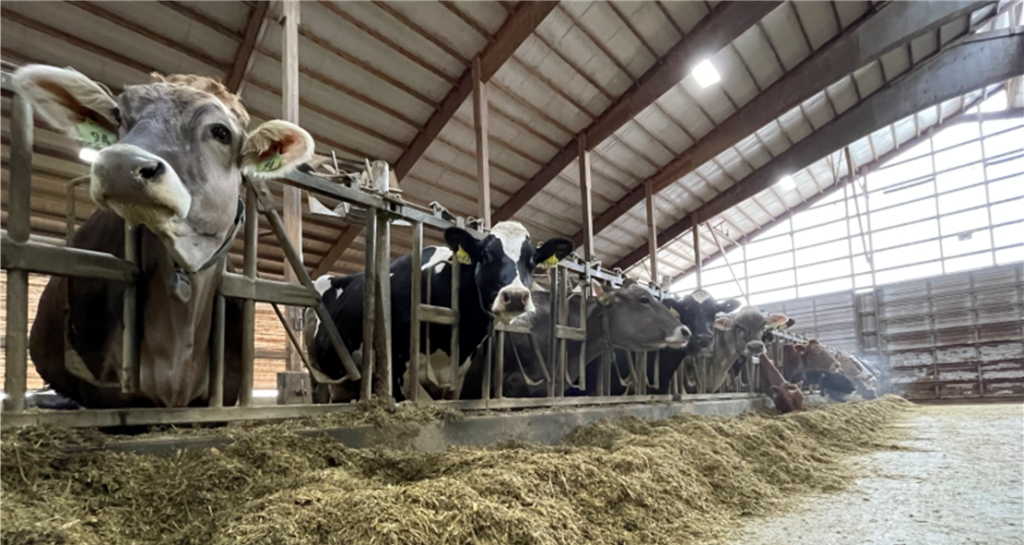
- Prevent overcrowding at the feed bunk, with at least 30 inches per head, and one cow or less per headlock.
- Stocking density should be one stall per cow or less.
- Monitor feed intake closely.
- Do not co-mingle cows and first-lactation heifers, and maintain social groups, to avoid older cows from intimidating younger cows at the feed bunk.
- Monitor body-condition scores in late-lactation cows.
- Calve cows with an ideal body condition score 3.5 to 3.75.
- Maintain feed bunk management, with adequate amount of feed for all cows, delivered and pushed up consistently.
Clinical and subclinical ketosis are the most common metabolic disorders in high-producing dairy cows. Since ketosis occurs when the cow is not consuming enough energy, we can look at ketosis as a symptom of another fresh cow problem that warrants further examination.