Milk Quality Starts with Training
In today’s market, high milk quality and udder health are essential for meeting processor quality standards and ensuring farm profitability. Among all management practices, few have a greater impact on reducing mastitis and improving milk quality than a standardized, consistent milking routine (Rodriguez, 2025). Because milking staff carry out these routines every day, structured and continuous training is one of the most cost-effective investments a farm can make.
Many dairy farms face challenges in workforce training, including high turnover, language barriers, limited formal education, and minimal agricultural experience (Rodriguez, 2025). Despite these challenges, training should be planned, organized, and intentional. In other words, having a clear plan for what workers need to learn, how they will learn it, and how successful training is going to be measured, is key.
On-Farm Training
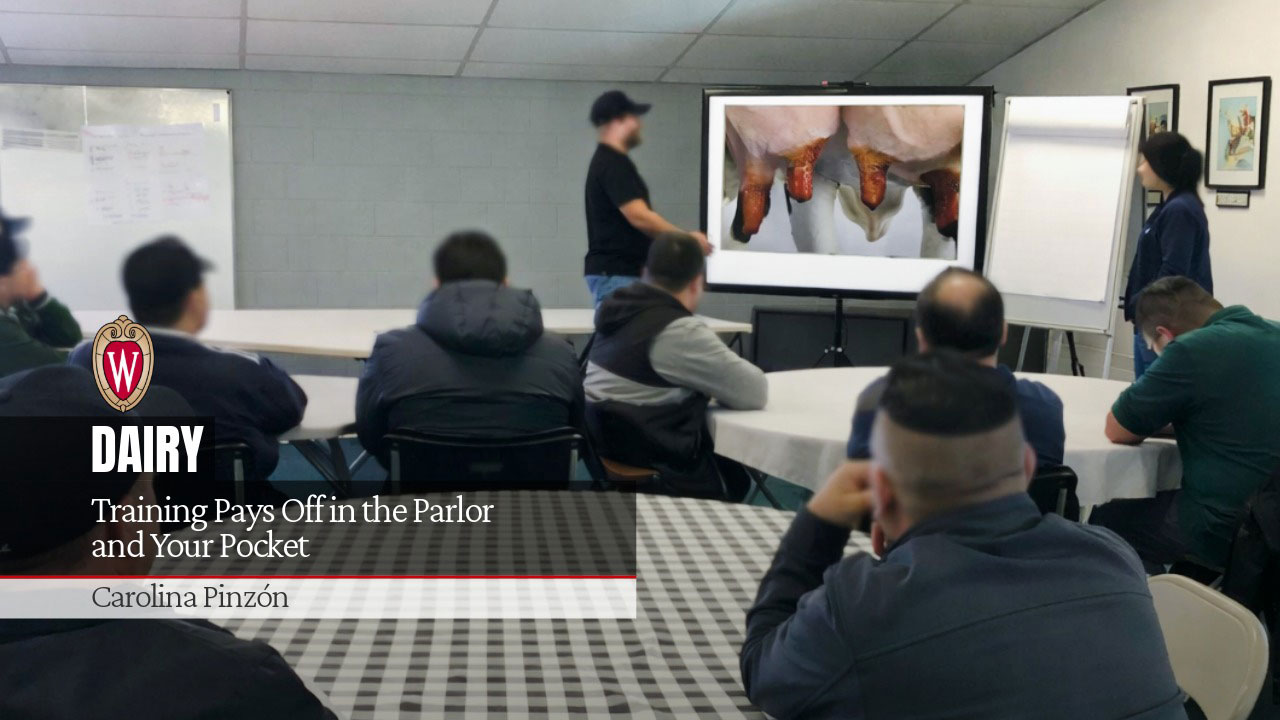
Many farms rely on informal shadowing to train new employees. While this approach is convenient, it often leads to inconsistent practices and gradual changes in the milking routine, increasing the risk of mastitis. Even farms with clear written protocols can struggle if employees do not fully understand the steps or how to apply them consistently in the parlor. Structured on-farm training helps connect written protocols with real-world practice in the parlor.
In the other hand, sending all employees to off-farm training is often impractical. However, one proven strategy is the “train-the-trainer” model, where a farm invests in training one person who then teaches and supports others, creating a continuous learning system and a strong multiplier effect (Yarber et al., 2015). Farms can also work with outside trainers, such as extension educators, veterinarians, consultants, or industry partners, who provide on-site guidance. Whether internal or external, the trainer should have strong technical knowledge of milking procedures and udder health, along with the people skills needed to teach, coach, and provide constructive feedback.
Training Content That Works
Adult learners are more likely to follow protocols when they understand the reason behind each step. Successful training programs focus on both how tasks are done and why they matter. When workers understand the purpose of each task and how they affect the outcomes they are more likely to comply. Key training topics for milking parlor workers should include:
- Cow handling: Understanding how calm and quiet environment makes a difference for complete and faster milking. Awareness that using the cow’s natural behavior to move them in the parlor benefits both cows and people.
- Milking routine: Understanding research-based practices for milking preparation including proper pre and post milking teat disinfection, fore-stripping, effective stimulation, and a consistent lag time of 90–120 seconds with the goal of attaching a properly working milking unit to clean, dry and well stimulated teats.
- Mastitis detection: Understanding that fore-stripping is the only way to identify abnormal milk for early detection of mild cases of clinical mastitis and to discard abnormal, non-saleable milk. Recognizing other signs of mastitis, such as swollen udder or depressed cows, so animals can be taken care of in a timely manner.
- Equipment checks: Understanding the importance of a properly functioning milking system to maintain udder health across the herd by monitoring liners, pulsators, and vacuum levels to identify problems early before they become bigger.
Measuring Training Impact
Linking training to measurable outcomes, such as lower mastitis risk, better udder hygiene, and higher milk quality, shows its real value. Training impact can be measured in several ways. Together, these measures help determine whether training is effective and where adjustments are needed.
- Knowledge gains: Simple quizzes before and after training or guided discussions can assess understanding. For example, studies report up to a 32% increase in antimicrobial stewardship knowledge (Garzon et al., 2023) and an 18% increase in milking routine knowledge (Rodriguez, 2025) after training.
- Behavior changes: Parlor observations and checklists are useful tools to track these changes. Research shows that well-trained workers improve cow flow, reduce time unit is on the cow, and follow more consistent teat preparation practices. Studies report that 83–90% of training participants improved technical skills after training (Heuwieser et al., 2024) and increased of teat disinfectant contact time by up to 9 seconds per cow after training (Rodriguez, 2025).
- Herd outcomes: The strongest evidence comes from herd health data. Farms with structured training programs often see stabilized or improved bulk tank somatic cell counts. Short-term increases in reported mastitis cases are common and usually reflect better detection by a more attentive and confident staff (Rodriguez, 2025).
Structured Training for Long-Term Success
Creating a farm culture that values learning is key to long-term success. Training should go beyond onboarding and be reinforced over time. To sustain progress and avoid protocol drift, farms should:
- Train all new hires, regardless of their experience levels.
- Schedule regular refresher trainings.
- Provide paid time for training.
- Use parlor observations and herd health records to track results.
- Tie training outcomes to clear farm goals.
- Document training by recording who was trained, when, and on what topics.
Structured training is an investment, not an expense. It supports healthier cows, higher milk quality, a more efficient parlor, and a confident workforce, which is critical for success in today’s dairy industry.
Author

Carolina Pinzón-Sánchez
Bilingual Dairy Outreach Specialist – As a statewide Dairy Outreach Specialist, Carolina identifies needs and incorporates research findings into high-quality outreach education programs around dairy production.
Published: February 16, 2026
Reviewed by:
- Katelyn Goldsmith and, Dairy Outreach Specialist at the University of Wisconsin–Madison Division of Extension
- Manuel Peña, Regional Dairy Educator at the University of Wisconsin–Madison Division of Extension
References
- Dairy farm worker milking equipment training with an E-learning system. Alanis, Valeria M. et al. 2022. JDS Communications, Volume 3, Issue 5, 322 – 327
- Antimicrobial stewardship on the dairy: Evaluating an on-farm framework for training farmworkers . Garzon, Adriana et al. 2023. Journal of Dairy Science, Volume 106, Issue 6, 4171 – 4183
- Checklist-based approach to measure milker behavior before and after training Heuwieser, Wolfgang et al. 2024. JDS Communications, Volume 5, Issue 3, 190 – 194
- Impact of training dairy farm personnel on milking routine compliance, udder health, and milk quality Rodriguez, Zelmar et al. 2025. Journal of Dairy Science, Volume 108, Issue 2, 1615 – 1624
- Evaluating a train-the-trainer approach for improving capacity for evidence-based decision making in public health. Yarber, L., et al. 2015. BMC Health Serv Res 15, 547 https://doi.org/10.1186/s12913-015-1224-2