Cold stress in dairy calves
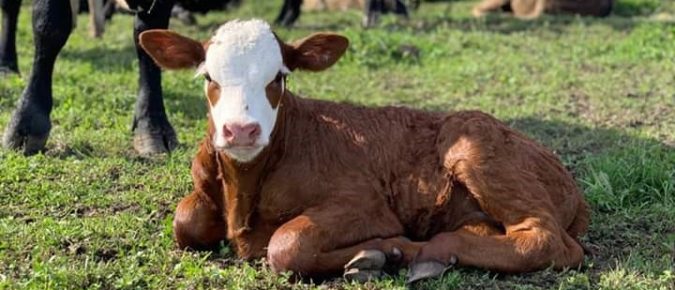
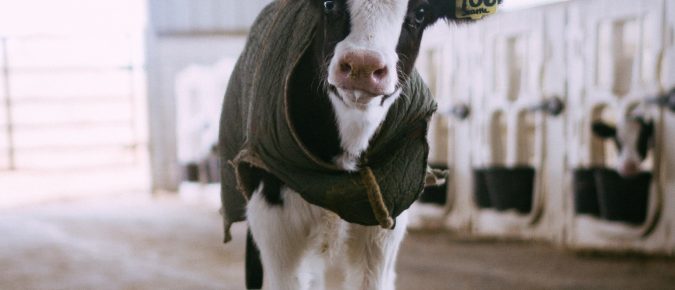
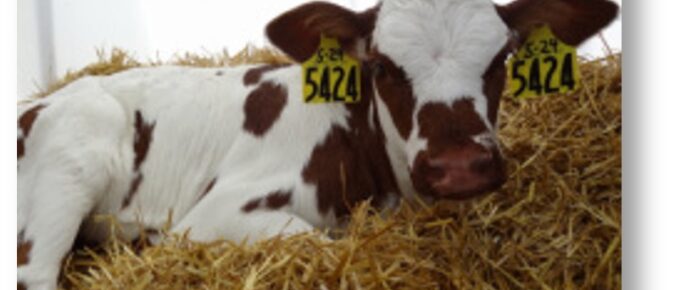
Raising calves is a huge expense on any dairy farm and getting them off to a great start is important in cold weather as much as warm weather. Cold stress can increase the risk of disease in pre-weaned calves.
Division of Extension

Explore research-based management strategies to enhance Animal Welfare and Herd Health, recognizing the relationship between optimal animal care and the success of dairy business.


Raising calves is a huge expense on any dairy farm and getting them off to a great start is important in cold weather as much as warm weather. Cold stress can increase the risk of disease in pre-weaned calves.
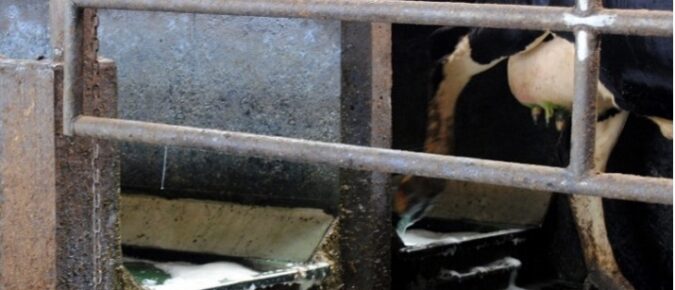
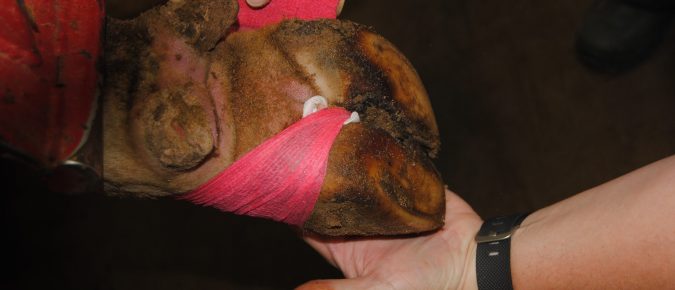
Digital dermatitis, commonly known as hairy heel warts, is a common infectious foot disease that causes lameness in cattle and often leads to decreased milk production, performance, and fertility in cattle. Learn how it affects robotic milking farms and strategies for prevention in this video.
Digital dermatitis, commonly known as hairy heel warts, is a common infectious foot disease that causes lameness in cattle and often leads to decreased milk production, performance, and fertility in cattle. Watch this video to learn more.
Healthy soil is the foundation of a productive farm. Monitoring soil health and maintaining soil integrity can improve water filtration, boost crop production and health, and foster biological and physical components of soil. Fields that receive dairy manure are likely to receive higher copper concentrations than non-dairy manure.
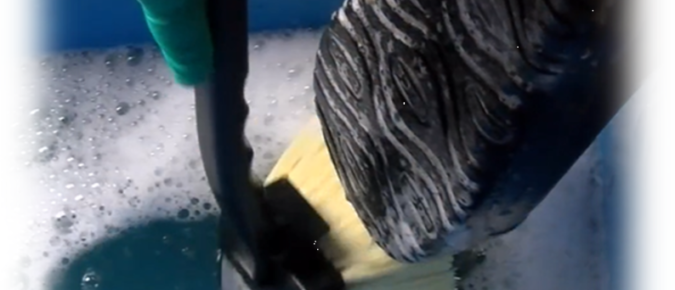
Keeping your livestock safe from microbes, including bacteria, viruses, and fungi, is the biosecurity goal that all farms should have. Wearing clean, sanitized footwear helps meet this goal as foot traffic moves microbes to and around the farm.
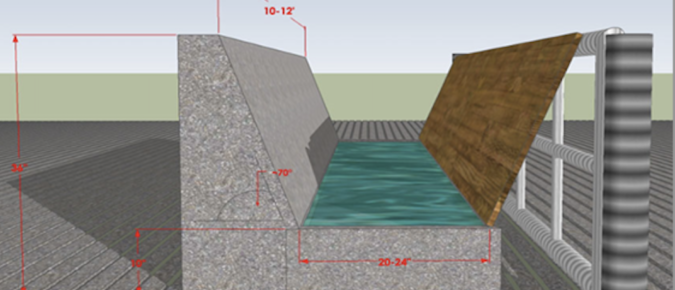
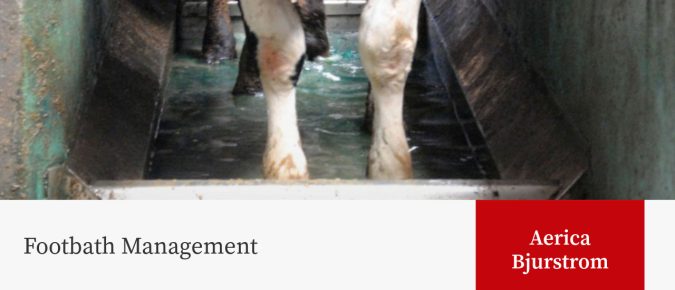
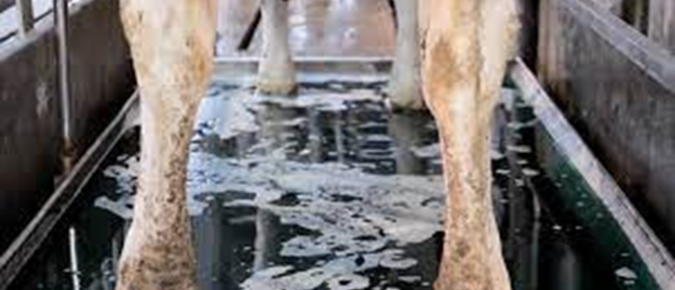
A footbath is one of the most important tools used on dairy farms to prevent lameness and maintain hoof health. When used properly and paired with a disinfectant, a footbath can prevent and control foot rot and digital dermatitis on dairy farms. Recently, the recommendations for footbath dimensions have changed after new research was conducted at the UW School of Veterinary Medicine.
There are times when cattle producers need to come to the aid of a downed animal. Daily observations should identify cattle that are unable to stand and there must be a plan in place for how to quickly respond to help these animals.
Footbaths are the most commonly used management tool to control Digital Dermatitis (DD) on dairy farms. Proper footbath use will make DD management more effective and save money by reducing the amount of solution used.
Digital dermatitis is one of the most common foot diseases of the dairy cow and can be found in even well-managed dairy herds. It is an infectious disease caused by a family of spiral-like bacteria called Treponema. Special attention must be given to this foot disease in order to treat the animals which serve as a reservoir of infection and to reduce the spread of infection.
While all the data points of information at our fingertips to monitor is a positive, there are still areas to improve when it comes to animal health and Automated Milking Systems (AMS), particularly for hoof health.
The three–week period before and after calving is one of the most challenging times for dairy cattle because they must cope with physiological challenges such as decreased dry matter intake, impaired immune system function, and increased metabolic and systemic inflammation (Drackley, 1999; LeBlanc, 2010). After calving, inflammation has been documented in cattle (Bionaz et al., 2007; Huzzy et al., 2009). This suggests that cattle experience some degree of inflammation due to tissue damage associated with birthing and the immense metabolic demand associated with the onset of lactation (Bradford et al., 2015).
Prototheca bovis has been cultured in herds and is emerging as a threat to producers statewide. Prototheca has been linked to mastitis since 1952, however, within the last five years, the prevalence has significantly increased. Similar to Staph aureus and mycoplasma, Prototheca is hard to detect, has no known cure, and is contagious by intermittently shedding from cow to cow.
![Robotic milking farms and digital dermatitis [Video] ▶️](https://dairy.extension.wisc.edu/files/2023/10/foot-in-bath-2-675x290.jpg)