
english | en español
Table of contents
Introduction
Dairy cattle diets are formulated on a dry matter (DM) basis, so it is important to understand what that means. All forages and feeds contain both water and dry matter so, in a simplistic way, the DM fraction refers to the absence of water.
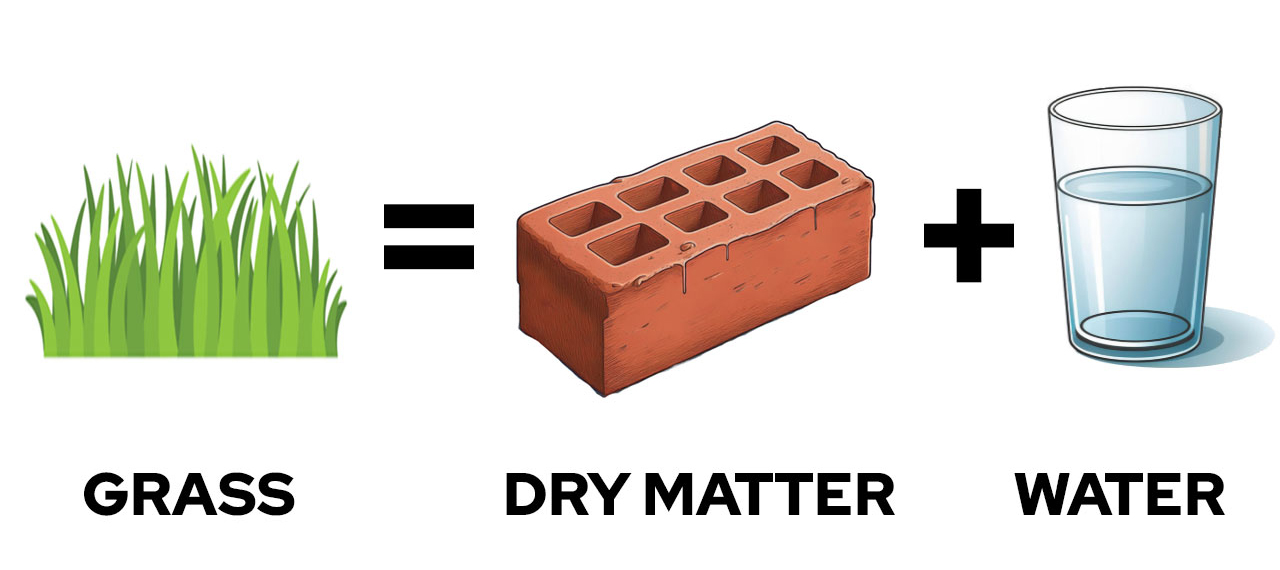
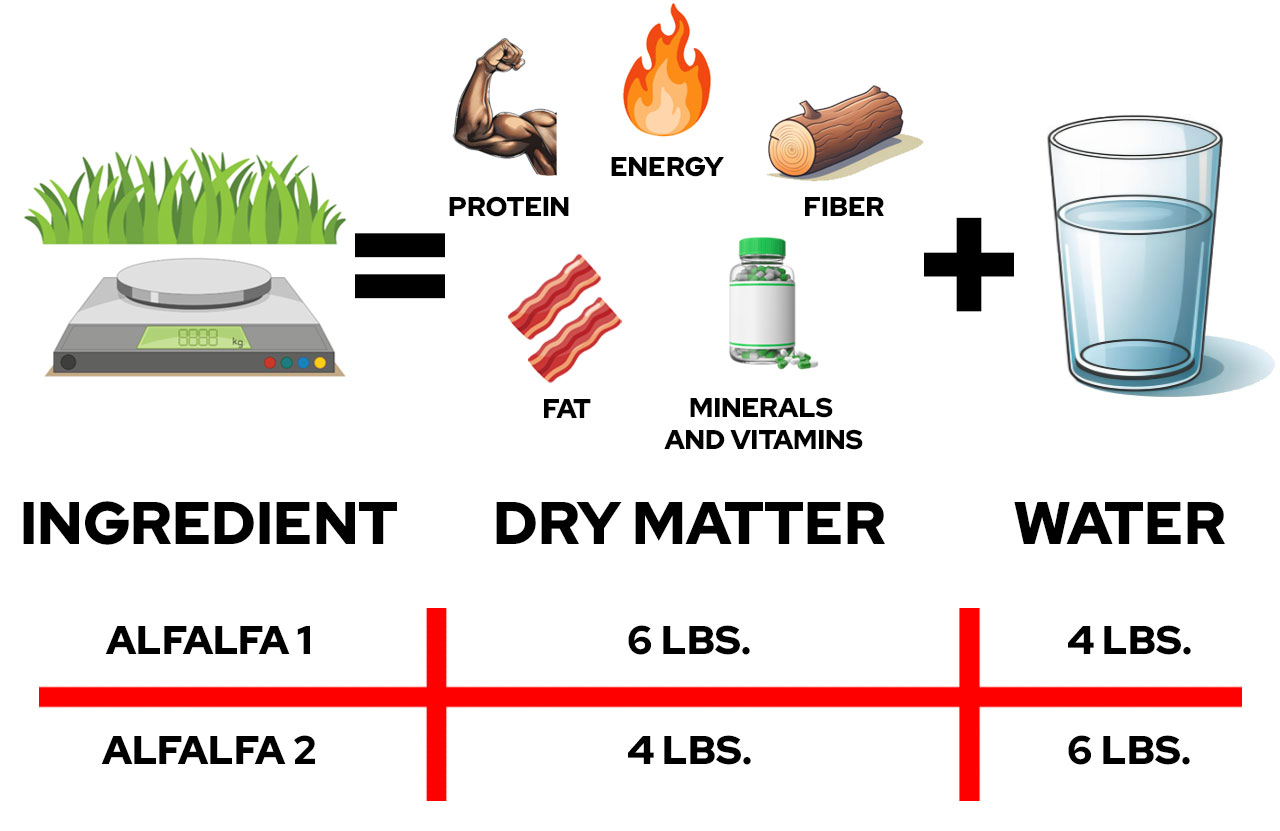
To formulate a diet, removing the water is key, because it is the only way to know the real nutrient value of the ingredients we use. The water in a forage dilutes all the other nutrients. The more water, the less concentrated the other nutrients are. For example, if you have two piles of fresh alfalfa and each pile weighs 10 lbs but one pile contains 40% water while the other contains 60% water. Even though the samples weighed the same, the first one has 6 lbs of nutrients and 4 lbs of water and the second one has 4 lbs of nutrients and 6 lbs of water. This can create a dramatic difference in the nutrients provided to the cow, and reduces the consistency of the diet.
Overlooking water content in animal feed can indeed lead to miscalculations in nutrient intake. This can result in animals consuming more water than necessary, potentially diluting the nutrients they receive and affecting their overall health and productivity. To prevent this, it is important to regularly measure the dry matter content in your feed and adjust diet formulation accordingly. This is especially critical when using stored feeds like corn silage or haylage, as their dry matter content can be influenced by factors such as weather conditions and harvest management practices.
How to measure the dry matter content of forage on my farm
The most accurate way to measure the dry matter content of your forages is by sending a representative sample to a National Forage Testing Association Certified lab ↗️. There, they will weigh the sample, dry it in an air oven at 131°F (55°C) for 48 hours, and weigh it again to calculate the difference in mass. However, most of the time you need this information quickly. Perhaps because the heavy rain the day before may have affected your feed, or you are about to start using a new batch of an ingredient that was not tested yet. When you need to determine dry matter quickly, there are several methods you can use:
Using a Koster Moisture Tester
Note: For more detailed information and drying times click here or follow this link:
https://buykoster.com/wp-content/uploads/2023/10/Koster-Booklet.pdf ↗️
- After weighing the empty container, place 100 grams of sample material in it (for bulkier materials use 10 grams).
- Place the container upon the heater and turn it on.
- Dry sample for at least 30 mins. Remember it can take some time to reach the maximum temperature. Setting a kitchen timer can help you keep track of time.
- Place the container on the scale and record its weight (container + dried sample)
- Return the container to the heater for 10 more minutes
- Place the container on the scale and record its weight (container + dried sample)
- Repeat this procedure until there is no change in the weight.
- Follow this example:
- Empty container = 200 g
- Sample + container = 300 g (means that the sample weighs 100g)
- Completely dried sample + container = 250 g
- % Dry Matter = [250 g – 200 g (empty container)] = 50 grams
- 50 g ÷ 100 g = 0.5 = 50% dry matter (0.5g x100%)
Testing Dry Matter content with a Microwave
Read detailed instructions on this whitepaper from Michigan State University ↗️.
- Grab a known weight of the forage you want to test.
- Record the weight of a plate
- Put the sample on the plate and run it in the microwave for 4 minutes
- Record the weight (plate+sample)
- Place it back in the microwave for 2 more minutes
- Record the weight (plate+sample)
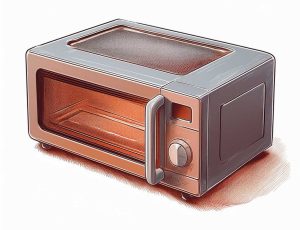
Note: Make sure to put a glass of water in the microwave to avoid the sample burning during the drying process.
Repeat steps 5 and 6 (now using 30 seconds instead of 2 minutes) until the weight recorded is no longer changing, then subtract the weight of the plate and follow the next example calculation.
- Empty Plate = 200 g
- Sample + plate = 300 g (means that the sample weighs 100g)
- Completely dried sample + plate = 250 g
- % Dry Matter = [250 g – 200 g (empty plate)] = 50 grams
- 50 g ÷ 100 g = 0.5 = 50% dry matter (0.5g x100%)
Since the initial weight of the sample was 100 grams and the final (dry) weight was 50 grams, it means that it contained 50 grams of water, thus the percentage of dry matter is 50%
Testing Dry Matter content with an Air Fryer
Read detailed instructions in this article from AgProud.com ↗️.
- Weigh 100 grams of representative sample.
- Place the sample in the air fryer.
- Set the fryer to 250º F.
- Run it for 30 minutes.
- Record the weight of the dry sample.
- Calculate the dry matter content as shown in the other two methods.
Summary
Understanding the role of dry matter in dairy cattle diet formulation and having the tools to measure it on the farm is key to optimizing feed utilization and minimizing waste. Adjusting the diet based on changes in dry matter can improve cattle performance, enhancing milk production, reproduction, and overall health. Knowing the dry matter content of your feed helps you better manage the nutrients in it, and will help you meet the requirements of the cattle you are feeding. This approach not only boosts feed efficiency but also contributes to greater profitability and sustainability in dairy operations.
Authors

Manuel Peña
Regional Dairy Educator