Skip to content
UW Madison Crest

Dairy

Division of Extension

  • HPAI
  • Topics
    • Animal Welfare & Herd Health
    • Emerging Technologies and Facilities
    • Feed and Nutrition
    • Heat Stress
    • Milk Quality and Milking Systems
    • Reproduction and Genetics
  • Events
  • News
  • Dairy Programs
    • Badger Dairy Insight
    • El “Break” Info-Lechero
    • Four-State Nutrition and Management Conference
    • Midwest Manure Summit
    • Milk Quality from the Udder World: Trainer Certification Program
  • Articles
  • Newsletters
    • Dairy Newsletter
    • Bovi-Noticias
  • People
  • About
    • About the Dairy Program
    • Our Impacts
    • Sign-up for the Dairy Program Newsletter
  • Contact Us
Search
University of Wisconsin-Extension

Articles

NSAID use around calving

NSAID use around calving

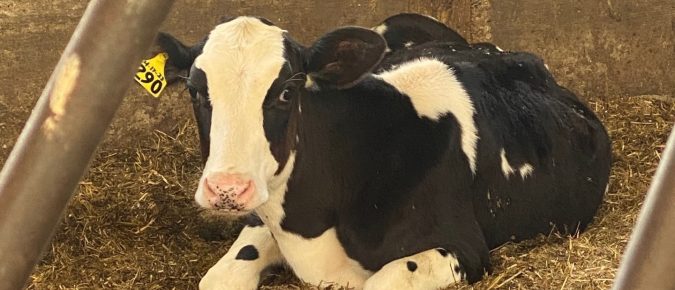
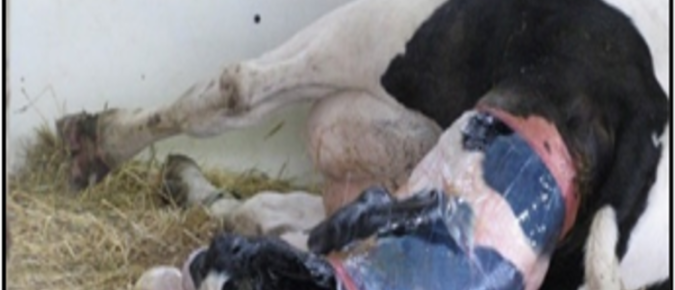
The three–week period before and after calving is one of the most challenging times for dairy cattle because they must cope with physiological challenges such as decreased dry matter intake, impaired immune system function, and increased metabolic and systemic inflammation (Drackley, 1999; LeBlanc, 2010). After calving, inflammation has been documented in cattle (Bionaz et al., 2007; Huzzy et al., 2009).  This suggests that cattle experience some degree of inflammation due to tissue damage associated with birthing and the immense metabolic demand associated with the onset of lactation (Bradford et al., 2015).

Target age and weight when breeding dairy heifers

Target age and weight when breeding dairy heifers

Raising heifers is one of the most cost-intensive areas of the farm.  From the day these animals hit the ground until they calve, they are a monetary burden on the farm. Therefore, getting these animals to calving as efficiently as possible makes sense.

Heifer Blueprint: Best practices for calf blood collection

Heifer Blueprint: Best practices for calf blood collection

Blood samples obtained from calves is a common procedure can be very useful for a variety of reasons including testing for disease and determining the transfer of passive immunity.  The quick and relatively simple method of taking blood samples can be low-stress and painless for both the animal and the individual. However, knowing where and how to place the need quickly to get a sample is important.

Heifer Blueprint: Transfer of passive immunity

Heifer Blueprint: Transfer of passive immunity

A sound colostrum management program should be the cornerstone to every farm’s calf management program. Calves are born with a naive immune system, one that does not have enough circulating antibodies to help fight disease. Because of this they are highly susceptible to disease for the first few weeks of life.

Heifer Blueprint: Colostrum quality

Heifer Blueprint: Colostrum quality

Colostrum management is the single most important factor in determining calf health and survival. Successful colostrum management requires farmers and managers to provide newborn calves with a sufficient amount of clean, high-quality colostrum within the first few hours of life.

Heifer blueprint: Best practices for biosecurity

Heifer blueprint: Best practices for biosecurity

Keeping calves healthy and alive is a critically important factor that contributes to a dairy farm’s success and profitability. The job of keeping a calf healthy begins at birth. Birth to three months of age is the most sensitive rearing period for the young calf. With biological, environmental, and nutritional stressors, the success of the first rearing phase depends on calf managers and feeders paying special attention to detail. 

Heifer Blueprint: Best practices for health management

Heifer Blueprint: Best practices for health management

Raising healthy dairy calves requires maximizing the calf’s level of immunity against disease while minimizing its exposure to infectious diseases.  However, there will still be times when calves will become sick.  Can you identify the sick calf?

Heifer Blueprint: Best practices for youngstock fluid therapy

Heifer Blueprint: Best practices for youngstock fluid therapy

Diarrhea, or scours, accounts for over 50% of illnesses in preweaned calves, contributing to 32 percent of all deaths in calves (USDA NAHMS 2014 Preweaned Calf Component Survey). Scours itself does not usually kill the calf. Rather, the calf will succumb from the dehydration and electrolyte imbalances which follow. Early identification of affected calves and early and aggressive treatment with fluids and electrolytes is the most successful way to treat scouring calves.

Optimizing use of sexed semen in dairy herds

Optimizing use of sexed semen in dairy herds

During the past two decades, a reproduction revolution has occurred in the dairy industry. A consequence of increased reproductive performance has been an increase in replacement heifer inventories, which in turn have decreased replacement heifer market values. Based on the UW-Extension Dairy Replacement ICPA Survey (Akins and Hagedorn, 2015), rearing costs of Holstein heifers from birth to calving averaged $2,100 from 1999 to 2015 and exceeded $2,500 in 2015.

Heifer Blueprint: Bedding comfort

Heifer Blueprint: Bedding comfort

Providing an excellent environment is a key component in successfully raising calves.  For calf housing the environment includes the calf’s resting space, feeding, and walking surfaces. A clean, dry resting surface ensures a hair coat that helps insulate the calf against the cold, low air temperatures,and sudden changes in temperature.

Do we still need the AM-PM Rule for the artificial insemination of cattle?

Do we still need the AM-PM Rule for the artificial insemination of cattle?

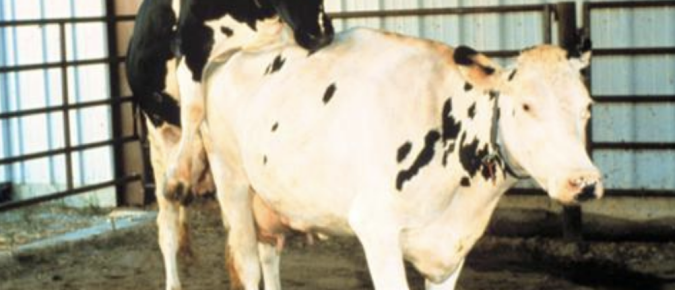
For nearly eighty years dairy producers have been indoctrinated in the use of the AM-PM rule for artificial insemination (AI) of cattle. The AM-PM rule dictates that a cow should receive AI 12 hours after first being observed in estrus. If a cow is seen in estrus in the AM she should receive AI that PM, and cows seen in estrus in the PM should receive AI the following AM.

Treating manure to produce clean water

Treating manure to produce clean water

Manure can be used in a sustainable manner by returning nutrients to the soil to grow crops that feed animals. However, on many livestock farms, manure poses operational, economic, and environmental constraints. Managing manure every day requires labor and money. Losses of manure constituents from the system result in negative environmental impacts such as degrading water and air quality.

Posts navigation

Posts pagination

◄ Page 1 … Page 15 Page 16 Page 17 Page 18 Page 19 Page 20 Page 21 Page 22 Page 23 Page 24 Page 25 ►

Division of Extension

Connecting people with the University of Wisconsin

  • Agriculture
  • Community Development
  • Health & Well-Being
  • Families & Finances
  • Natural Resources
  • Positive Youth Development

Agriculture at Extension

  • Agriculture Water Quality
  • Crops and Soils
  • Farm Management
  • Horticulture
  • Livestock

Questions?

Contact us at dairy@extension.wisc.edu

Dairy Newsletter

Stay up to date on the latest information and upcoming programs from Extension Dairy, sign up for our newsletter.

Sign up now.

University of Wisconsin-Madison      |        Explore Extension: Agriculture Community Development Families & Finances Health Natural Resources Youth
Connect With Us
Support Extension
Extension Home

We teach, learn, lead and serve, connecting people with the University of Wisconsin, and engaging with them in transforming lives and communities.

Explore Extension »

County Offices

Connect with your County Extension Office »

Map of Wisconsin counties
Staff Directory

Find an Extension employee in our staff directory »

staff directory
Social Media

Get the latest news and updates on Extension's work around the state

facebook iconFacebook

twitter icon Follow on X


Facebook
Follow on X

Feedback, questions or accessibility issues: info@extension.wisc.edu | © 2026 The Board of Regents of the University of Wisconsin System
Privacy Policy | Non-Discrimination Statement & How to File a Complaint | Disability Accommodation Requests

The University of Wisconsin–Madison Division of Extension provides equal opportunities in employment and programming in compliance with state and federal law.