At a Glance
Timely ingestion of high-quality colostrum transfers critical immunoglobulins to newborn calves, protecting them during the early immune development phase. Absorption efficiency rapidly declines after four hours of life, with all absorption ending by 24 hours. High bacterial contamination in equipment or udders blocks immunoglobulin uptake and introduces infectious agents to the calf. Establishing strict colostrum handling procedures, including quality testing, equipment sanitation, proper storage, and early high-quality colostrum feeding protocols directly reduces calf mortality and ensures robust herd health.
What are the primary risks associated with poor colostrum quality and delayed timing?
- Feeding colostrum past the critical 2-hour window dramatically drops IgG absorption efficiency, which may result in serum IgG levels under 10 mg/mL depending on the quality of the colostrum fed.
- Infectious Disease Exposure: Bacterial contamination (>100,000 cfu/mL total count) introduces Salmonella, Mycoplasma, and E. coli, causing severe diarrhea, septicemia, and reduced Immunoglobulin absorption.
- Elevated Mortality Rates: Calves with inadequate passive immunity face significantly higher illness and mortality rates during their first two months of life.
How can producers optimize colostrum management and verify success?
- Test and Pasteurize: Measure IgG levels using a Brix refractometer (> 25% Brix for good quality colostrum) and heat colostrum to 140°F for 60 minutes to eliminate pathogens without destroying immunoglobulin activity.
- Administer Proper Volume Early: Feed calves 8%–10% of their body weight (3–4 liters) within 2 hours of birth, followed by an additional 2 liters within 12 hours.
- Monitor Herd Outcomes: Test serum total protein (STP) in calves aged 1–7 days using a refractometer, aiming for >40% of calves to achieve STP levels of >6.2 g/dL, 30% of calves with STP levels of 5.8 – 6.1 g/dL, and 20 % of calve with STP levels of 5.1 – 5.7 g/dL.
Introduction
Feeding high-quality colostrum to the calf as soon as possible after birth is the most important thing you can do for calf health, including for dairy bull calves and beef x dairy calves. Calves are born with an immature immune system, which means they have little defense or immunity against disease. Unlike key nutrients, the placenta does not allow the transfer of the dam’s immune cells to the unborn calf1. However, the dam transfers immune cells to colostrum, which she begins to make five weeks prior to calving2. The timely ingestion of adequate amounts of high-quality colostrum allows the calf to acquire passive immunity from the dam. Passive immunity helps the calf to fight disease during the first four months of life as its immature immune system is developing3.
Factors Affecting Passive Transfer
Passive transfer occurs when immunoglobulin G (IgG), immune cells (white blood cells), and hormones are absorbed through the lining of the calf’s gut from the mother’s colostrum4. After a calf is born, oral stimulation starts the passive transfer clock. To maximize passive transfer, the calf should be fed colostrum within the first 2 hours of life2. After four hours, there is a progressive decline in the efficiency of absorption (Figure 1)5. The passive transfer process ends 24 hours after birth3.
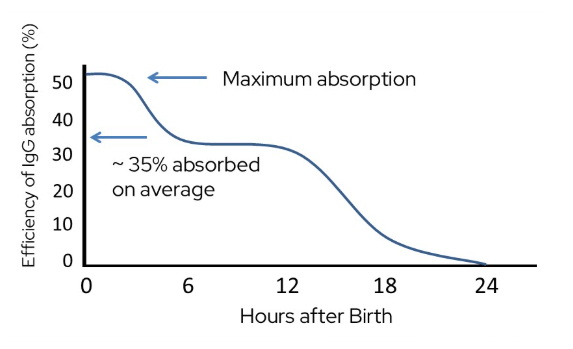
(Figure by Heather Schlesser.)
Absorption efficiency also influences passive transfer. Conneely et al.7 reported that calves absorb IgG most efficiently when fed colostrum at approximately 8.5% of body weight, with absorption rates declining as feeding volume increases. For example, absorption decreased from 38% at 8.5% of body weight to 29% at 10% of body weight. Frederick et al. (2025)8 evaluated colostrum feeding rates of 6%, 8%, 10%, and 12% of body weight. Serum IgG concentrations at 24 hours were lowest in calves fed 6% of body weight (28.8 g/L) and highest in calves fed 10% (41.1 g/L) and 12% (43.4 g/L)8. However, IgG absorption efficiency declined as feeding volume increased, from 47.8% and 46.2% in the 6% and 8% groups, respectively, to 41.0% and 36.3% in the 10% and 12% groups8. Signs of colic-like behavior, indicative of discomfort, were observed only in calves fed 10% or 12% of body weight8.
It is important that newborn calves are born in clean, dry environments so they do not ingest manure or other materials from the calving process while learning to stand. Remember, whatever is ingested first starts the passive transfer clock. It is not desirable to have fecal bacteria absorbed first. The passive transfer process allows large molecules to pass from the gut into the bloodstream of the calf. Bacteria may also bind IgG in the gut, preventing transfer into the bloodstream9, 10.
It is also important to minimize bacterial contamination in colostrum. Contaminated colostrum is one of the earliest potential exposures to infectious agents, such as Salmonella, Mycoplasma, fecal coliforms, and the organism that causes Johne’s disease11, 12, 13. These infectious agents are known to cause diarrhea and septicemia.
Factors Affecting Colostrum Quality
It is recommended that fresh colostrum contain less than 100,000 colony-forming units per milliliter (cfu/mL) total bacteria count and fewer than 10,000 cfu/mL total coliform count14. Ideally, herds should meet the Dairy Calf and Heifer Association recommendations of less than 50,000 cfu/mL total bacteria count and fewer than 5,000 cfu/mL total coliform count15. There are three main sources of bacterial contamination of colostrum: infection or fecal contamination on the udder; contamination during collection, storage, or while feeding from dirty equipment; and bacterial proliferation in stored colostrum2. Collect colostrum from udders that have been prepared the same as if milk were going into the bulk tank for human consumption; use clean, sanitized equipment. Feed fresh colostrum immediately, refrigerate, or freeze in individual serving sizes.
Colostrum quality varies dramatically among cows. Several factors, including dam vaccination16, length of the dry period17, and the time of colostrum collection, can be managed by producers.2. Colostrum should be collected within three hours of giving birth to minimize dilution of IgG by milk production18. It is not recommended to feed colostrum that is of low quality, bloody, from cows with mastitis, or positive with Johne’s disease19.
A tool to help reduce colostrum bacterial counts is pasteurization. In this process, colostrum is heated to 140⁰F for 60 minutes20. Pasteurization is recommended even though the process destroys 80 – 90 percent of the colostrum’s white blood cells. Heating at this low temperature for an hour maintains immunoglobulin activity and colostrum fluid characteristics, while reducing important pathogens including E.coli, Salmonella, Mycoplasma, and the Johne’s disease pathogen20, 21.
Measuring Colostrum Quality
Good quality colostrum should have an IgG concentration above 75 grams/Liter (g/L)22. Although colostrum’s IgG measurement does not indicate the white blood cells and hormones that are also included, it is an excellent indicator of colostrum quality. Fair quality colostrum has an IgG concentration between 50 and 74.9 g/L, and poor quality colostrum has an IgG concentration between 25 and 49.9 g/L (Table 1)22. Producers should measure the quality of the colostrum prior to feeding by measuring it on-farm using a refractometer or a cow-side immunoassay kit.
Table 1. Colostrum quality based on IgG concentration and indicates the BRIX equivalent22
| Classification | IgG g/L | Brix Equivalent | |
|---|---|---|---|
| 🟢 | Excellent | ≥ 100.0 | ≥ 30% |
| 🟢 | Good | 75.0 – 99.9 | > 25% |
| 🟢 | Fair | 50.0 – 74.9 | > 22% |
| 🟡 | Poor | 25.0 – 49.9 | > 19% |
| 🔴 | Transition Milk | < 25.0 | < 19% |
Tools for Measuring Colostrum Quality
A refractometer is designed to measure the amount of soluble solids in a sample, meaning it measures all the solids dissolved in the water, beginning with sugar, salts, protein, and acids. It is not dependent on the temperature of the colostrum. A Brix value of 25% corresponds to 75 g/L of IgG22. Therefore, a colostrum sample with a value greater than 25% on a Brix refractometer represents a good-quality sample; scores of 30% represent an excellent-quality sample22.
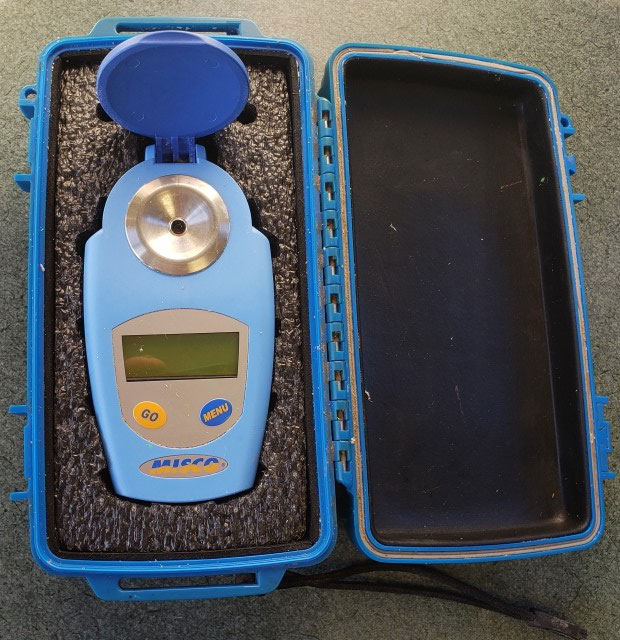
To use a portable refractometer (Image 1), place a few drops of colostrum on the prism and cover the sample. The refractometer is then held up to a light source. Read the Brix value at the line between the light and dark areas on the scale. The prism and sample cover must be thoroughly cleaned after each use. To use an electronic refractometer (Image 2), place the manufacturer-specified amount into the designated spot on the refractometer. Select the BRIX scale to display the colostrum quality. The manufacturer should provide instructions on checking and adjusting the calibration. Distilled water should have a reading of zero if the instrument is calibrated correctly23.

Colostrum quality may also be measured using an immunoassay test such as the DVM Rapid Test II™ system by MAI Animal Health. This is a cow-side immunoassay kit that differentiates high- from low- quality colostrum24. The test yields only a positive or negative result, and does not provide an estimate of the actual IgG concentration. Each sample takes about 20 minutes to complete.
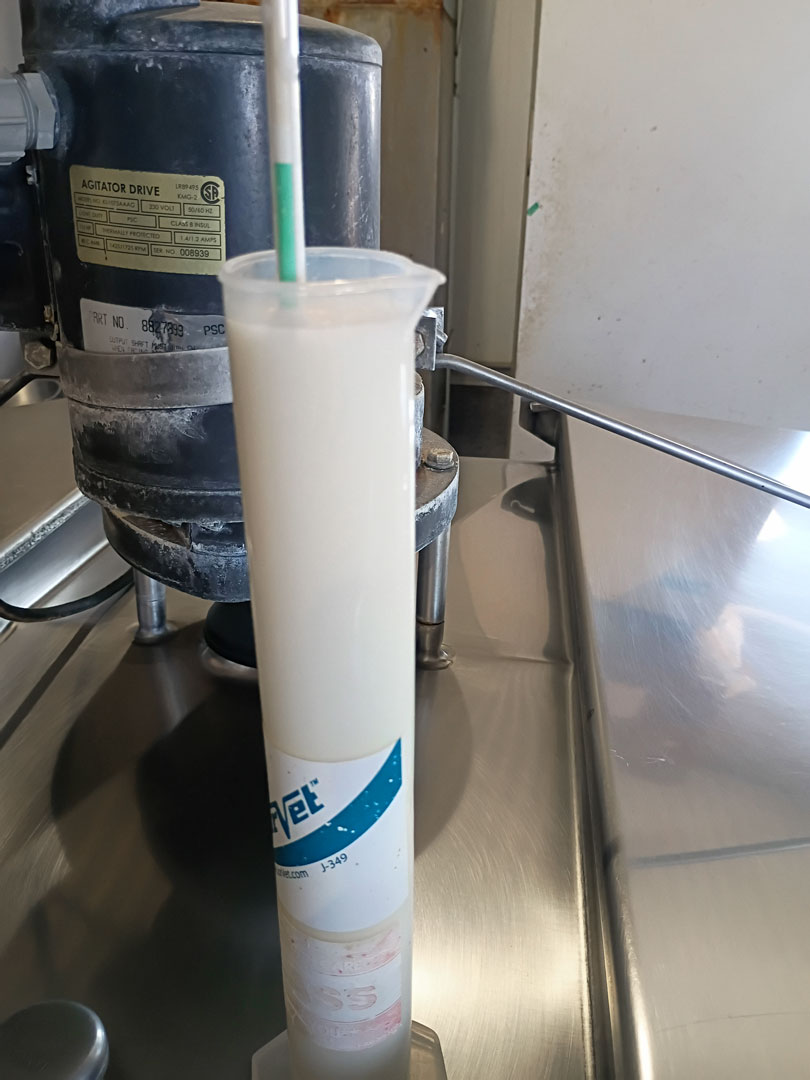
The Colostrometer™ (Image 3) is a low-cost method of differentiating colostrum quality that was developed in the 1980s by Dr. D.S. Fleenor and G.H. Stott25. The Colostrometer™ measures specific gravity and uses a color-coded scale to indicate quality. Unfortunately, colostrum components other than IgG can affect specific gravity, which can give inaccurate readings. Colostrum measured in the green area of the Colostrometer™ contains > 50 g/L of Ig, yellow contains 20 – 50 g/L, and red contains <20 g/L.
To use the Colostrometer™, the colostrum must first be at room temperature (72⁰F). At lower temperatures, the Colostrometer™ overestimates the IgG concentration, while IgG is underestimated at higher temperatures23. To read the measurement, float the Colostrometer™ in the cylinder filled with room-temperature colostrum, wait approximately one minute, and determine the color reading. Please note that a green value from the Colostrometer™ suggests a value of > 50 g/L of IgG, which is considered fair with the new colostrum quality standards22.
How Much Colostrum Does the Calf Need?
To achieve passive transfer, a calf should be fed a minimum of 200 g of IgG in the first feeding of colostrum, and 100 g of IgG in the second feeding of colostrum22. However, because producers frequently do not know the concentration of IgG in the colostrum being fed, it is currently recommended that calves be fed 8%-10% of their body weight in colostrum at first feeding2. This means the calf should be fed three to four liters of colostrum at birth and an additional two liters by 12 hours after birth. Research has shown calves fed four liters of colostrum at birth and two liters 12 hours later have higher blood serum IgG levels at 24 hours of life26. The calf should be hand-fed a known volume of colostrum using either a bottle or an esophageal feeder to guarantee enough colostrum is consumed14.
Comparing Maternal Colostrum with Colostrum Supplements and Replacers
Feeding high-quality maternal colostrum is the best, and should be the first option. If the colostrum from the dam is not of adequate quality, then either feed acceptable colostrum collected or stored from another animal, or add a colostrum supplement. A colostrum supplement is designed to be fed with the maternal colostrum because it does not provide the desired 50 g/L IgG when fed alone26.
Colostrum replacer may be fed when good quality colostrum is not available. A good quality colostrum replacer contains at least 50 g/L IgG extracted from cow’s milk and provides fat, protein, vitamins, and minerals like colostrum would27. Serum-based colostrum replacers are also available that contain IgG harvested from bovine blood, but they do not contain intact white blood cells or hormones. When feeding a colostrum replacer product, it is still important to feed 200g of IgG in the first feeding, and 100g of IgG in the second feeding to achieve passive transfer22. If feeding a replacer product that has 50 g/L of IgG, then you will need to feed 4 L or 4 packets of replacer product for the first feeding, and 2L or 2 packets of the replacer product for the second feeding.
It is important to keep in mind that colostrum replacers are designed to be fed in place of colostrum, while colostrum supplements are to be fed in addition to maternal colostrum. Although colostrum replacers are designed to replace colostrum, there have been mixed results, with many products failing to routinely provide the necessary 10 milligram/milliliter (mg/mL) IgG in the blood serum of calves 27, 28, 29, 30.
How to Store Colostrum
If you have extra good-quality colostrum (> 75g/L), it can be saved for use when you do not have good-quality colostrum readily available. To store colostrum, immediately divide it into portions less than two quarts in size to enhance cooling and reduce bacterial growth. Immediately refrigerate these portions if they will be used within five days. Adding potassium ascorbate as a preservative enhances refrigerator shelf life31. Colostrum can also be frozen for future needs. Frozen colostrum can last up to six months when frozen in a chest or deep freezer32. Freezing in a refrigerator freezer is not advised due to the freeze/thaw cycles. Slowly thaw only the amount of frozen colostrum that you need. Colostrum should be thawed in a water bath with a temperature between 104 and 140⁰F33. A 3-quart bag of colostrum will take about 30 minutes to completely thaw at a temperature of 125⁰F33. Do not microwave or rapidly thaw. Rapidly thawing can destroy some of the IgG content. Freezing kills all white blood cells found in colostrum2. Therefore, always feed some fresh or refrigerated colostrum along with the colostrum that was frozen. Do not refrigerate any unused thawed colostrum.
Measure Calves for Rate of Passive Transfer
It is important to routinely check all of your pre-weaned calves for failure of passive transfer. Calves that experience failure of passive transfer are more likely to become sick or die in the first two months of life as compared to calves with adequate immunity34. Failure of passive transfer occurs when the calf does not absorb an adequate amount of antibodies from the colostrum. In the United States, mortality rates in pre-weaned dairy heifers are estimated to range from 8% to 11%35. This can happen for many reasons, including not feeding high-quality colostrum (IgG > 75 g/L), not feeding an adequate amount of colostrum (8%-10% of body weight), and not feeding colostrum in a timely fashion( <2 hours).
The major factor affecting the absorption of IgG molecules is how quickly after birth the calf was fed colostrum. A calf is considered to have failure of passive transfer if its blood serum IgG levels are less than 10 mg/mL. An indirect measurement of serum IgG is performed by measuring serum total protein (TP) in calves that have been fed fresh or frozen colostrum and are 24 hours to seven days old. Unfortunately, serum total protein and IgG concentrations for calves fed a colostrum replacer product are poorly correlated36. This means that you cannot use serum total protein as an indicator of passive transfer success or failure if the calf has been fed a colostrum replacer. Producers should work with their veterinarian to develop a plan for measuring TP. This plan should include drawing blood weekly from healthy calves 1-7 days of age and testing the serum with a refractometer. Interpret the results at the group level. The goal is for 80% of those calves tested to have a TP greater than or equal to 5.5 grams/deciliter (g/dL). Researchers are finding that higher TP levels (>6 g/dL) are better33. However, TP > 7.5 g/dL in calves less than one week of age indicates an inflammatory immune response; >8 g/dL indicates dehydration.
Table 2. Success of transfer of passive immunity and outlines the industry goals for each category37
| Categories | IgG Level | Equivalent STP (g/dL) | Equivalent Serum Brix Level (%) | % Calves in each Category | |
|---|---|---|---|---|---|
| 🟢 | Excellent | ≥ 25.0 g/L | ≥ 6.2 g/dL | ≥ 9.4% | > 40% |
| 🟢 | Good | 18.0 – 24.9 g/L | 5.8 – 6.1 g/dL | 8.9 – 9.3% | ~ 30% |
| 🟡 | Fair | 10.0 – 17.9 g/L | 5.1 – 5.7 g/dL | 8.1 – 8.8% | ~ 20% |
| 🔴 | Poor | < 10.0 g/L | < 5.1 g/dL | < 8.1% | < 10% |
The Importance of Colostrum for Calves Leaving the Farm
Feeding sufficient amounts of high-quality colostrum to calves at a young age is the most important management factor in determining health and survival of the neonatal calf37. It is vitally important for calves leaving the farm, such as market dairy bulls, heifers, and beef x dairy calves. These market calves will encounter increased pathogen levels during transport, at the market, and when grouped in their next feeding facility. Share your farm’s passive transfer protocol and TP history with the next buyer of your calves. Doing so will build buyer trust in your market calves.
References
- Arthur G.H. The development of the conceptus. In: Arthur G.H., Nokes D.E., Pearson H., editors. Pregnancy and parturition in veterinary reproduction and obstetrics. 7th edition. W.B. Saunders; Philadelphia: 1996. pp. 51–109.
- Godden S. Colostrum management for dairy calves. Vet Clin North Am Food Anim Pract. 2008;24(1):19- 39. doi: 10.1016/j.cvfa.2007.10.005
- Weaver D.M., Tyler J.W., VanMetre D.C. Passive transfer of colostral immunoglobulins in calves. J Vet Intern Med. 2000; 14:569–577.
- Broughton C.W., Lecce J.G. Electron microscopic studies of the jejunal epithelium from neonatal pigs fed different diets. J Nutr. 1970; 100:445–449.
- Besser T.E., Garmedia A.E., McGuire T.C. Effect of colostral immunoglobulin G1 and immunoglobulin M concentrations on immunoglobulin absorption in calves. J Dairy Sci. 1985; 68:2033–2037
- Fischer A.J., Song, Y., He. Z., Haines. D.M., Steele M.A. Effect of delayed colostrum feeding on passive transfer and intestinal bacterial colonization in neonatal male Holstein calves. J. Dairy Sci. 2018. 101: 3099-3109. Doi: 10.3168/jds.2017-13397
- Conneely M, Berry DP, Murphy JP, Lorenz I, Doherty ML, Kennedy E. Effect of feeding colostrum at different volumes and subsequent number of transition milk feeds on the serum immunoglobulin G concentration and health status of dairy calves. J Dairy Sci. 2014 Nov;97(11):6991-7000. doi: 10.3168/jds.2013-7494. Epub 2014 Sep 6. PMID: 25200772.
- Frederick G., Wieland M., Singh A., Ewing R., Steele M.A., Somula H., and Mann S. Effects of feeding colostrum volume at 6%, 8%, 10%, or 12% of birth body weight on efficiency of immunoglobulin G absorption, gastric emptying, and postfeeding behavior in Holstein calves. J Dairy Sci. 2025; 108: 13680-13690. doi: 10.3168/jds.2025-27228
- James R.E., Polan C.E. Effect of orally administered duodenal fluid on serum proteins in neonatal calves. J Dairy Sci. 1978; 61:1444–1449
- Johnson J., Godden S., Molitor T. The effect of feeding heat-treated colostrum on passive transfer of cellular and humoral immune parameters in neonatal dairy calves. J Dairy Sci. 2007;90:5189–5198
- Steele M.L., McNab W.B., Poppe C. Survey of Ontario bulk tank raw milk for food-borne pathogens. J Food Prot. 1997;60(11):1341–1346.
- Streeter R.N., Hoffsis G.F., Bech-Nielsen S. Isolation of Mycobacterium paratuberculosis from colostrum and milk of subclinically infected cows. Am J Vet Res. 1995;56(10):1322–1324.
- Walz P.H., Mullaney T.P., Render J.A. Otitis media in preweaned Holstein dairy calves in Michigan due to Mycoplasma bovis. J Vet Diagn Invest. 1997; 9:250–254.
- McGuirk S.M., Collins M. Managing the production, storage and delivery of colostrum. Vet Clin North Am Food Anim Pract. 2004;20(3):593–603.
- Anderson J.,Bringhenti L., Dalton J., Dado-Senn B., Mathes D., Michael N., Overton, M., Mathews R., Morrill, K., Ward, M., and Wesemann B. Dairy Calf and Heifer Association Gold Standards. 2026. Dairy Calf and Heifer Association. https://calfandheifer.org/gold-standards/
- Myers L.L., Snodgrass D.R. Colostral and milk antibody titers in cows vaccinated with a modified live rotavirus-coronavirus vaccine. J Am Vet Med Assoc. 1982; 181:486–488.
- Grusenmeyer D.J., Ryan C.M., Galton D.M. Shortening the dry period from 60 to 40 days does not affect colostrum quality but decreases colostrum yield by Holstein cows. J Dairy Sci. 2006;89(Suppl 1):336.
- Foley J.A., Otterby D.E. Availability, storage, treatment, composition, and feeding value of surplus colostrum: a review. J Dairy Sci. 1978; 61:1033–1060.
- BAMN. Bovine Alliance on Management and Nutrition. American Feed Industry Association; Arlington (VA): 1995. A guide to colostrum and colostrum management for dairy calves.
- Godden S., McMartin S., Feirtag J. Heat-treatment of bovine colostrum II: Effects of heating duration on pathogen viability and immunoglobulin G. J Dairy Sci. 2006;89:3476–3483.
- McMartin S., Godden S., Metzger L. Heat-treatment of bovine colostrum I: Effects of temperature on viscosity and immunoglobulin G. J Dairy Sci. 2006;89:2110–2118.
- Sockett DC, Breuer R, Smith L, Keuler N, Earleywine T. Frontiers in Vet Sci. 2023. Investigation of Brix refractometry for estimating bovine colostrum immunoglobulin concentration. 10: 1240227
- Heinrichs, J, and Jones, Coleen. Colostrum Management Tools: Hydrometers and Refractometers. May 5, 2016. https://extension.psu.edu/colostrum-management-tools-hydrometers-and-refractometers.
- Chigerwe M., Dawes M.E., Tyler J.W. Evaluation of a cow-side immunoassay kit for assessing IgG concentration in colostrum. J Am Vet Med Assoc. 2005; 227:129–131
- Fleenor, W.A., Stott, G.H. Hydrometer Test for Estimation of Immunoglobulin Concentration in Bovine Colostrum. J Dairy Sci. 1980; 63:973-977.
- Morin D.E., McCoy G.C., Hurley W.L. Effects of quality, quantity, and timing of colostrum feeding and addition of a dried colostrum supplement on immunoglobulin G1 absorption in Holstein bull calves. J Dairy Sci. 1997;80:747–753.
- Quigley J.D., Strohbehn R.E., Kost C.J. Formulation of colostrum supplements, colostrums replacers and acquisition of passive immunity in neonatal calves. J Dairy Sci. 2001; 84:2059–2065.
- Swan H., Godden S., Bey R. Passive transfer of immunoglobulin g and preweaning health in Holstein calves fed a commercial colostrum replacer. J Dairy Sci. 2007; 90:3857–3866.
- Mee J.F., O’Farrell K.J., Reitsma P. Effect of a whey protein concentrate used as a colostrum substitute or supplement on calf immunity, weight gain, and health. J Dairy Sci. 1996; 79:886–889.
- Smith G.W., Foster D.M. Short Communication: absorption of protein and immunoglobulin G in calves fed a colostrum replacer. J Dairy Sci. 2007; 90:2905–2908.
- Stewart S., Godden S., Bey R. Preventing bacterial contamination and proliferation during the harvest, storage and feeding of fresh bovine colostrum. J Dairy Sci. 2005; 88:2571–2578.
- Abd El-Fattah, A., Rabo, F., El-Dieb, S., El-Kashef, H. Preservation methods of buffalo and bovine colostrum as a source of bioactive components. International Dairy Journal. 2014; 39: 24-27. doi:10.1016/j.idairyj.2014.04.008.
- Harvesting & Storing Colostrum. Michigan State University. https://www.canr.msu.edu/dairy/uploads/files/ENGLISH%20SOP%20-%20Harvesting%20&%20Storing%20colostrum.pdf. Accessed: August 3rd 2026.
- Raboisson, Didier et al. “Failure of Passive Immune Transfer in Calves: A Meta-Analysis on the Consequences and Assessment of the Economic Impact.” PloS one vol. 11,3 e0150452. 17 Mar. 2016, doi:10.1371/journal.pone.0150452
- National Animal Health Monitoring System. USDA-APHIS Veterinary Services; Ft. Collins (CO): 1996. Dairy 1996: National dairy health evaluation project. Dairy heifer morbidity, mortality, and health management focusing on preweaned heifers.
- Lopez A.J., Steele M.A., Nagorske M., Sargent R., and Renaud D.L.Hot Topic: Accuracy of refractometry as an indirect method to measure failed transfer of passive immunity in dairy calves fed colostrum replacer and maternal colostrum. J. Dairy Sci. 2020. 104:2023-2039. doi: 10.3168/jds.2020-18947.
- Lombard J, Urie N, Garry F, Godden S, Quigley J, Earleywine T, McGuirk S, Moore D, Branan M, Chamorro M, Smith G, Shivley C, Catherman D, Haines D, Heinrichs AJ, James R, Maas J, Sterner K. Consensus recommendations on calf- and herd-level passive immunity in dairy calves in the United States. J Dairy Sci. 2020 Aug;103(8):7611-7624. doi: 10.3168/jds.2019-17955. Epub 2020 May 21. PMID: 32448583.
Originally Published: October 2020
Updated: August 2026
Original Authors:
- Jackie McCarville – Division of Extension, University of Wisconsin–Madison
- Heather Schlesser – Division of Extension, University of Wisconsin–Madison
- Ashely A Olson – Division of Extension, University of Wisconsin–Madison
Updated by:
- Jackie McCarville – Division of Extension, University of Wisconsin–Madison
- Heather Schlesser – Division of Extension, University of Wisconsin–Madison
Reviewers:
- Katelyn Goldsmith – Division of Extension, University of Wisconsin–Madison
- Adam Hartfiel – Division of Extension, University of Wisconsin–Madison