Two Heads Are Better Than One: A Starter Guide to Pairing Dairy Calves
Part 4: Housing
At a Glance
Group housing designs significantly influence calf health and labor requirements. The right housing strategy depends on a farm’s facility infrastructure and calving rate. In cold-weather regions, barns can improve comfort for both calves and staff. However, outdoor hutches can be a lower-cost solution that maximizes ventilation.
What Are the Options for Social Housing?
- Outdoor Hutches: Super hutches can accommodate pairs or small groups of calves, while individual hutches can be converted to pairs with fencing.
- Indoor Pens with Manual Feeding: Pairs or small groups can be formed by removing dividers. Calves can be mob fed, which can save labor, or with individual bottles or nipple buckets.
- Automatic Milk Feeding: Automatic milk feeding systems can save labor but require a higher calving rate, and disease risk can be greater in large groups.
How Can Producers Optimize Housing and Bedding Solutions?
- Provide Adequate Space: Maintain 30 to 40 square feet of bedded, dry resting space per calf. Avoid pairing calves in a single hutch intended for one calf.
- Ensure Proper Ventilation: Outdoor hutches provide calves with plenty of fresh air. Inside barns, ensure adequate air exchange while avoiding drafts.
- Prioritize Deep Bedding: In cold weather and seasonal transitions, use deep bedding to insulate calves and achieve a Nesting Score of 3.
Introduction
Farms vary greatly in their management, and calf housing is not one-size-fits-all. This article summarizes what we learned from a survey on common calf-raising practices and discusses housing options and best practices for space allowance and bedding for pairs or small groups of calves.
We conducted a survey of dairy producers and calf raisers across the United States in late 2019. One of the striking things we observed was the great diversity in herd size and housing types. The 413 farms in our sample were located across 30 states. All regions of the United States were represented, although the greatest number of responses came from the Upper Midwest and the Northeast. On average, the 380 dairy farmers had approximately 190 preweaned heifer calves, and for the 33 calf raisers, the average was 4,500 calves. Some farms had no milkfed calves on the day they answered the survey, but others had tens of thousands.
In our sample, 23% of the respondents housed at least some of their preweaned calves in pairs or groups. These farms used a variety of housing strategies, and some used more than one type of housing for pairs or groups of calves. We considered these farms to use “social housing.” Twenty-nine percent of these farms housed calves indoors in groups with automatic milk feeding (“autofeeder”) systems (Figure 1). However, indoor pair or small-group housing with manual feeding was more common, making up 46% of the social housing farms. Finally, 26% of the social housing farms kept calves in pairs or small groups outdoors. These farms used either “super hutches” or connected individual hutches. Each of these strategies is described below.
Indoor Housing
Many producers prefer to house their calves in a barn for the comfort of both the animals and the people who care for them, particularly in inclement weather. In our survey, producers who pair or group housed calves in a barn described benefits such as ease of observing all calves compared to in hutches, as well as labor savings, such as when adding bedding or cleaning the pens.
Automatic Milk Feeding
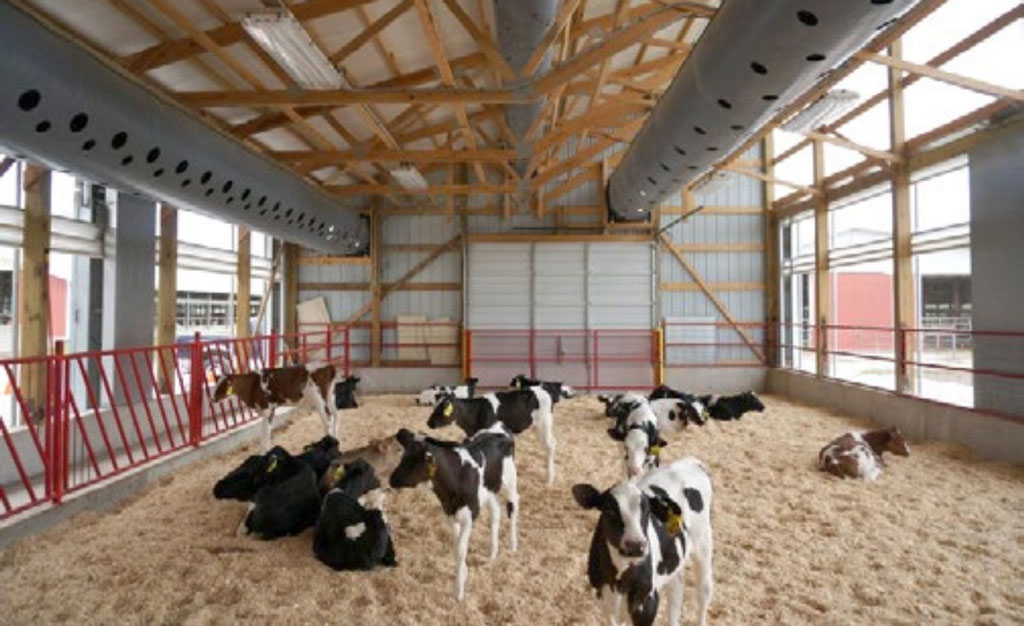
Automatic milk feeding systems (Figure 1) can save labor relative to manual feeding. An in-depth survey of Wisconsin farms in 2017 reported autofeeder systems required only 8 hours of labor per calf compared to 15 hours per calf on farms manually feeding calves. However, close attention must still be paid to observing calves as well as monitoring, maintaining, calibrating, and sanitizing the automated feeding system. For more on sanitation practices, see the Hygiene practices article in this series.
Autofeeders are one method for allowing calves to achieve greater total daily intakes and to feed more frequently, consistent with their natural behavior.
(Photo credit: The Dairyland Initiative)
In addition, the computerized system can provide useful data to track individual feeding behavior, adding to a calf manager’s toolkit to identify potential problems.
Although many farms manage autofeeder groups successfully, large group size is a risk factor for disease. Additionally, autofeeder systems are not feasible for farms with few heifer calves born on a weekly basis because the age range will be too large within a group. Group size is discussed further in the Grouping strategies part of this series.
Manual Feeding
In our survey, out of the farms using indoor social housing, 61% fed calves manually. Half of these farms fed calves using mob feeders. Some of those producers described labor savings when feeding calves in groups compared to individually feeding them. The other half of farms fed milk or milk replacer using individual bottles, buckets, or teat buckets for calves within a group. Some of them also used headlocks. These options are discussed further in the Feeding practices and reducing cross sucking part of this series.
In manual feeding systems, farms either pair calves or use smaller group sizes than with autofeeders. Many producers create pairs or small groups by removing the panels dividing individual pens. On some farms, calves are initially housed individually. For example, calves a few days apart in age may be separated initially to ensure both calves are drinking milk confidently before pairing. Other farms with same-age calves choose to pair them starting at birth. Some of those producers have reported reduced infrastructure costs for dividers relative to individual pens.
Outdoor Housing
For farms currently housing their calves in hutches, pair or group housing is still an option without having to invest in building a calf barn.
Paired Hutches
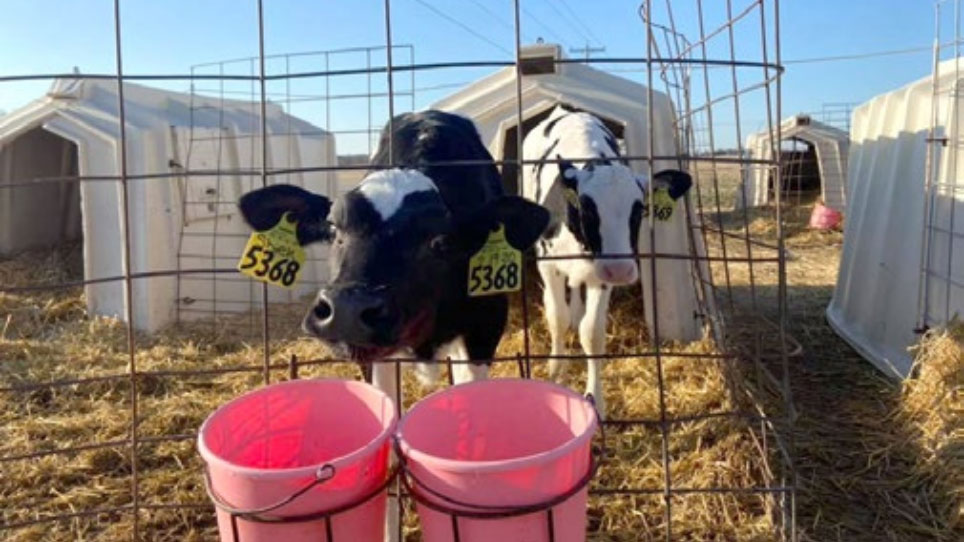
One low-cost option is to combine existing hutches into pairs by connecting them with fencing. Corral panels are sturdier, but wire panels are functional and less expensive. When cutting wire panels, ensure any parts accessible to calves have smooth edges to avoid the risk of injury. Some producers choose to push both hutches close together. Others leave more space in between to create a larger outdoor area for the calves. The gap between the hutches should be blocked to prevent calves from escaping (Figure 2). If desired, calves within a pair can be separated initially using a panel across the center of the outdoor area.
A downside of the paired-hutch system is calves within a pair prefer to spend most of their time together. This means both calves will lie inside the same hutch. Although this is good for their social bonding, a single hutch does not provide enough space or bedding material for both growing calves and their waste. This creates challenges to maintain a clean, dry environment.
Super Hutches
An alternative outdoor system for pair- or group-housed calves is to purchase or build super hutches. Also called group hutches, these jumbo hutches are commonly used for weaned heifers. Prefabricated super hutches typically offer close to 60 square feet of bedded space. This means a pair of preweaned calves in a super hutch have enough space to lie together in the sheltered, bedded area. Also, the fencing and feeding accessories for super hutches are already designed for group housing.
(Photo credit: Christine Bender, McFarlandale Dairy, Wisconsin)
A disadvantage of super hutches is the greater challenge of initially separating neonatal calves if desired. A few individual hutches may still be needed, which depends on the greatest number of calves typically born per day on the farm and the number of days the calves will be kept in individual housing. Furthermore, the additional move may be stressful for the calves. Finally, super hutch doorways have larger openings. In inclement weather, modifications may be needed to protect calves from the elements. Young preweaned calves are less able to regulate their body temperature compared with weaned heifers. Avoid facing hutch openings toward the direction from which prevailing winds blow. For more information on thermoregulation and bedding, see page 4 ???.
Space Allowance
Providing enough space for each calf in a group is essential. Expert recommendations for usable, bedded resting space vary from 30 square feet per calf to 35 or even 40 square feet per calf. Sufficient bedded area is needed to maintain enough clean, dry resting space.
Inside a calf barn, pairs housed in 8-foot-wide pens (i.e., two 4-foot-wide pens with the divider removed) should have a pen length of 8 feet to achieve a total of 64 square feet, or 32 square feet per calf. Pens with a length of 7 feet give a total of 56 square feet, or 28 square feet per calf when paired. Shorter pens should not be used for Holstein calves.
Autofeeder pens (Figure 1) can sometimes use space more efficiently than rows of pens for pair-housed calves, which also require space in the front and back for foot traffic and to prevent drafts. Indoors, adequate barn volume per calf is needed to ensure proper ventilation. For details about ventilation strategies, visit The Dairyland Initiative website ↗️. The large bedded packs for autofeeder pens allow more space per calf within the same barn footprint. The increased space per calf, however, means bedding costs are slightly higher in autofeeder systems ($0.19 vs. $0.16 per calf per day), according to the 2017 Wisconsin survey.
With outdoor housing, calves are more exposed to the elements. Calves housed outdoors commonly have both a sheltered hutch and an outdoor area, which may or may not be bedded (Figure 2). The outdoor area is not considered suitable dry resting space with rain, snow, or hot, sunny weather in the absence of shade. For pairs in super hutches, the sheltered resting space is typically around 60 square feet, providing close to 30 square feet per calf. If more than two calves are housed in a super hutch, however, the inside space alone provides less than the recommended space per calf. When pairing calves in hutches meant for individual calves, providing only one hutch per pair is discouraged, even with access to an outdoor area. A single plastic hutch intended for individual calves does not meet the recommended space allowance for a pair of calves when considering only the inside space. This includes “extra-large” styles, which exceed the minimum space recommendations for individual calves but not for pairs.
Bedding
Preweaned calves spend more than half of their time lying down. Regardless of the season, bedding is important for calf comfort, creating a cushioned surface for lying. Options include — but aren’t limited to — straw, sawdust, shavings, or sand. It is essential to maintain bedding to keep calves dry. For more information, see the Hygiene practices part of this series or visit The Dairyland Initiative website ↗️.
In cold weather, calves use energy to maintain their core body temperature, diverting energy away from growth and immune function. For newborn calves, this occurs at temperatures of 50 to 60 °F or cooler. As calves grow and their rumens develop, they generate more body heat. In addition, the ratio of their skin surface area relative to their body size decreases. This means one-month-old calves do not expend extra energy to stay warm until temperatures drop to freezing (32 °F) or below.
Providing consistent deep, dry bedding when air temperatures are near or below these thresholds is important. Without proper bedding, calves lose heat to their surroundings. Clean, deep, dry bedding allows calves to maintain body heat by nesting down into the bedding with a layer of insulating air around them.
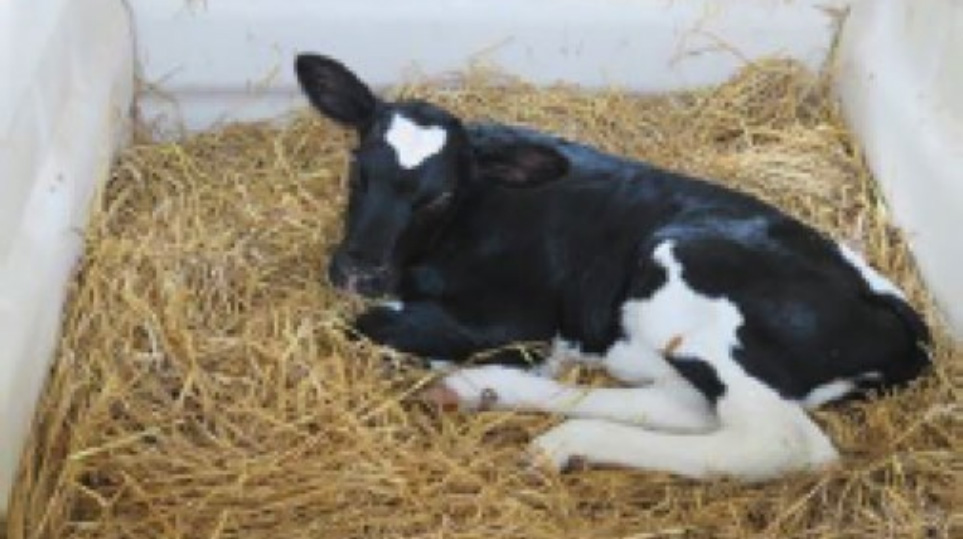
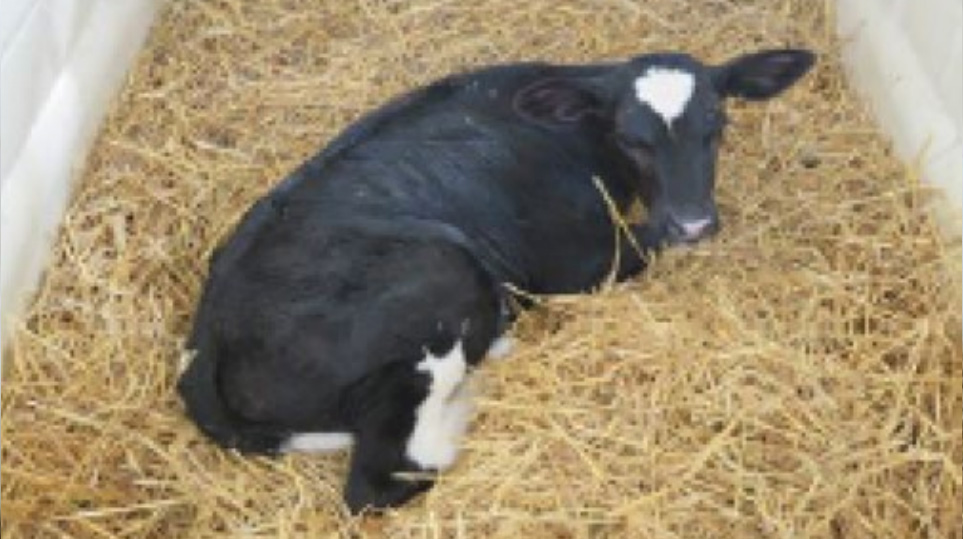
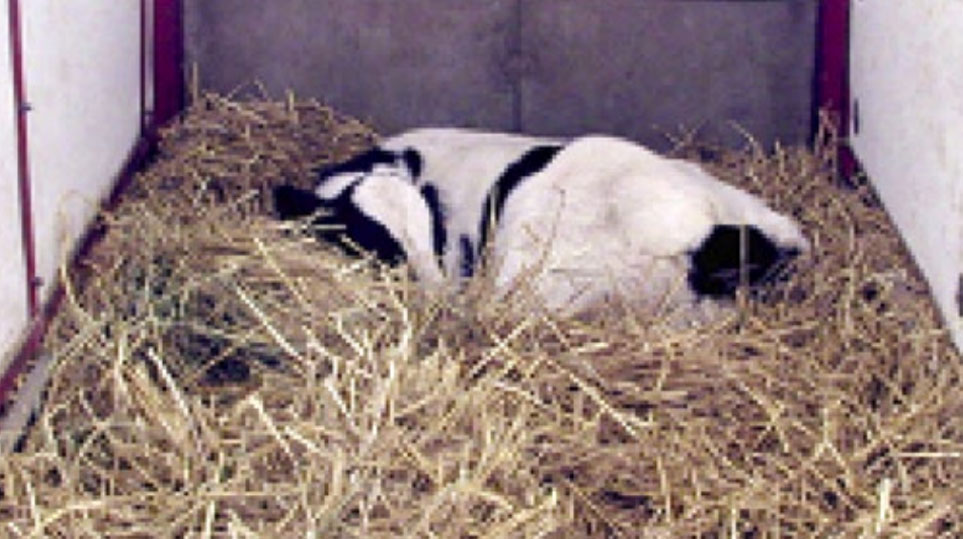
To assess whether the bedding is sufficiently deep, observe calves while they are lying down and look at their hind legs to determine the Nesting Score (Figures 3, 4, and 5). Aim for a Nesting Score of 3, which is best achieved using long straw as bedding. Higher nesting scores are associated with less respiratory disease in calves.
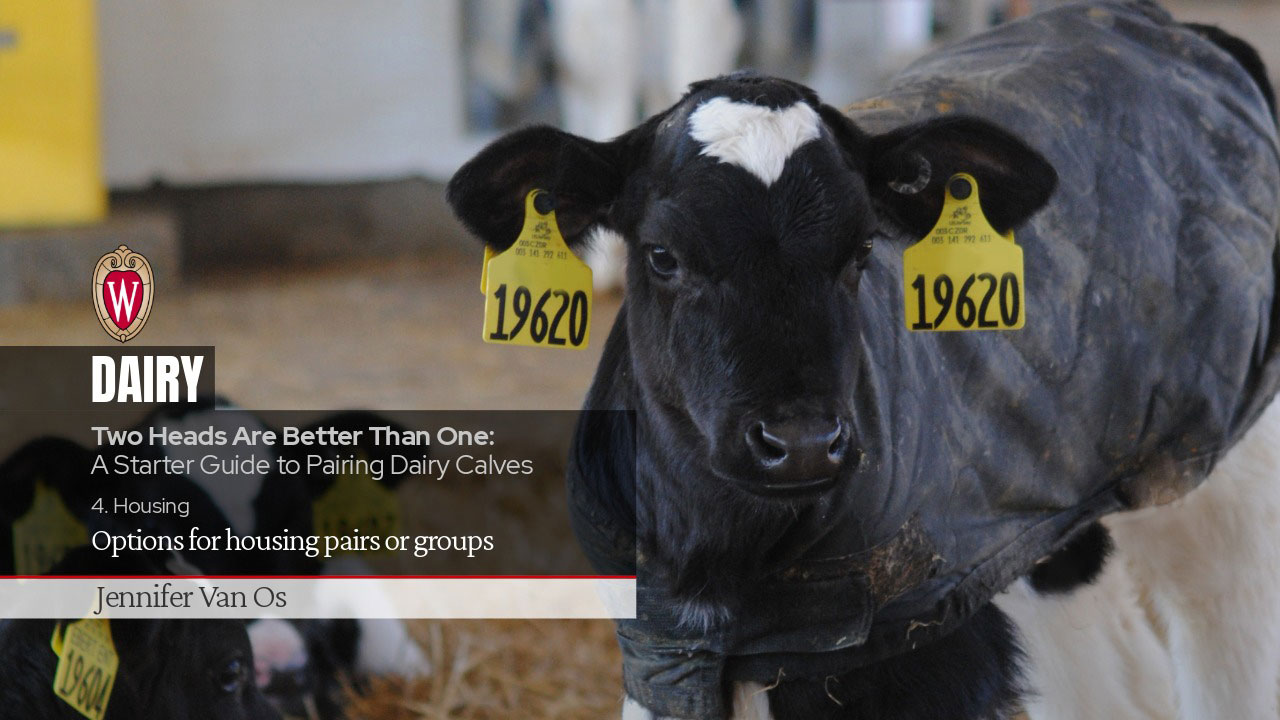
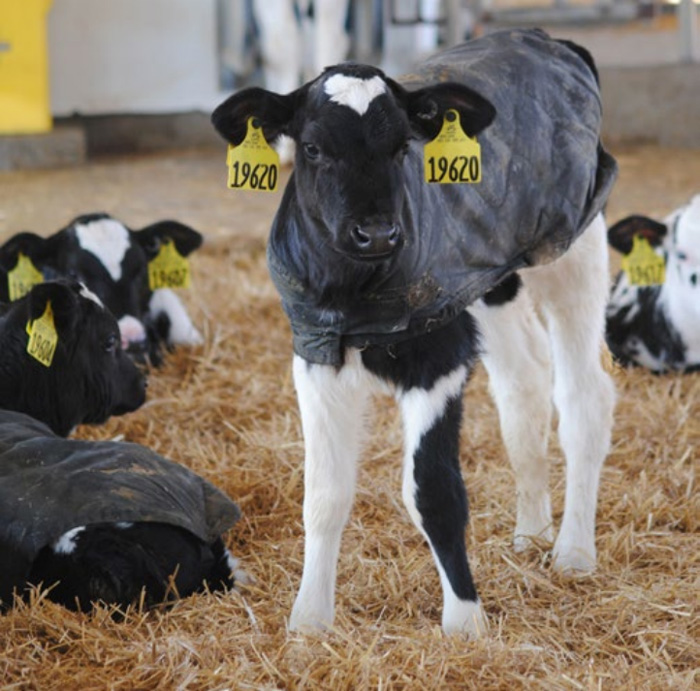
Calf jackets (Figure 6) can complement — but not substitute for — deep bedding. Jackets add the equivalent of approximately 1 Nesting-Score unit. A calf with a jacket and bedding with a Nesting Score of 2 can experience an overall Nesting Score of approximately 3. Adding a jacket to a Nesting Score of 1 does not provide adequate insulation in cold weather. Sufficient bedding is especially important during seasonal transitions when there are large swings between daytime and nighttime temperatures. When daytime temperatures are high, calves should not wear jackets or they will overheat.
References
- Cantor, M.C., H.W. Neave, & J.H.C. Costa. 2020. Effectively raising pair-housed calves: Common questions from transitioning farmers. Progressive Dairy.
- DCHA Gold Standards, 2nd Edition. 2016. Dairy Calf and Heifer Association.
- Lago, A., S.M. McGuirk, T.B. Bennett, N.B. Cook, & K.V. Nordlund. 2006. Calf respiratory disease and pen microenvironments in naturally ventilated calf barns in winter. J. Dairy Sci. 89:4014-4025.
- Mills-Lloyd, S. & T. Kohlman. 2018. Heifer blueprint: Bedding comfort. UW-Extension.
- Mills-Lloyd, S. & T. Kohlman. 2017. Heifer blueprint: Finding the balance – Management of calf health versus cost of production.
- Nordlund, K.V. & C.E. Halbach. 2019. Calf barn design to optimize health and ease of management. Vet Clin. Food Anim. 35:29-45.
- Ollivett, T. L. 2020. How does housing influence Bovine Respiratory Disease in dairy and veal calves? Vet. Clin. Food Anim. 36:385-398.
- Replacement Housing. The Dairyland Initiative. https://thedairylandinitiative.vetmed.wisc.edu/home/housing-module/replacement-housing/
- Silva, F.L.M., J.M.C. Van Os, C. Winder, M. Akins, T. Kohlman, T. Ollivett, H. Schlesser, R. Schley, S. Stuttgen, & J. Versweyveld. In preparation. U.S. farmer-reported housing and milk-feeding practices for preweaned dairy calves.
- Wormsbecher, L., E. Vasseur, J. Rushen, D. Haley, R. Bergeron, & A.M. de Passillé. 2017. A method of outdoor housing dairy calves in pairs using individual calf hutches. J. Dairy Sci. 100:7493–7506.
Originally Published: June 2022
Authors
- Jennifer Van Os, Department of Animal & Dairy Sciences, UW–Madison
Reviewers
- Courtney Halbach, Department of Medical Sciences, UW–Madison School of Veterinary Medicine
- Tina Kohlman, UW–Madison Division of Extension Fond du Lac County
- Theresa Ollivett, Department of Medical Sciences, UW–Madison School of Veterinary Medicine