At a Glance
Dietary lipids provide high-density energy to dairy cows, primarily boosting milk production and reproductive performance. Microbes in the rumen tend to turn unsaturated fatty acids into saturated fatty acids through a process called biohydrogenation. Later, the fatty acids go to the small intestine for absorption. Managing this fat intake within specific thresholds prevents negative rumen fermentation impacts while supporting cows through early lactation energy deficits.
What is the primary risk of overfeeding unsaturated fatty acids to dairy cattle?
Excessive unsaturated fatty acids disrupt fiber-fermenting rumen bacteria, reducing microbial activity and overall dry matter intake. Ruminal biohydrogenation shifts composition drastically, converting unsaturated fatty acids such as linoleic (C18:2) and linolenic (C18:3) acids into more saturated forms such as stearic acid (C18:0) to mitigate bacterial toxicity. Feeding high amounts of fat (higher than 7%) could potentially trigger metabolic diseases and digestive issues.
How can producers optimize fat supplementation during high-demand periods?
- Target high-demand windows: Increase fat supplementation gradually during early lactation or heat stress when energy demands outpace natural feed intake.
- Utilize protected fats: Formulate rations with bypass fats or calcium salts to shield lipids from rumen microbes and ensure direct intestinal absorption.
Introduction
Nutritionally, fats, also known as lipids, are an incredible source of energy. Fat provides many benefits to livestock diets including increasing energy density and improving reproductive performance. Fats contain 2.25 times more energy than carbohydrates, which means that small amounts of fat can add a large amount of energy to a ration (Feinstein, 1983). This energy boost can impact milk production and reproduction. It is especially relevant during early lactation when the cow is experiencing negative energy balance and uses her stored energy (in the form of body fat) to support milk production. But harnessing the benefits of fat relies on providing the right kinds and amount of fats in the diet. This article will define what fat is, how much fat your cows need, and what happens when the cow consumes it, and when fat supplementation may be beneficial.
What is fat?
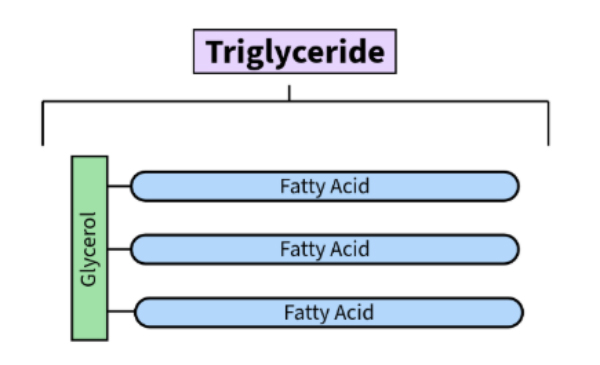
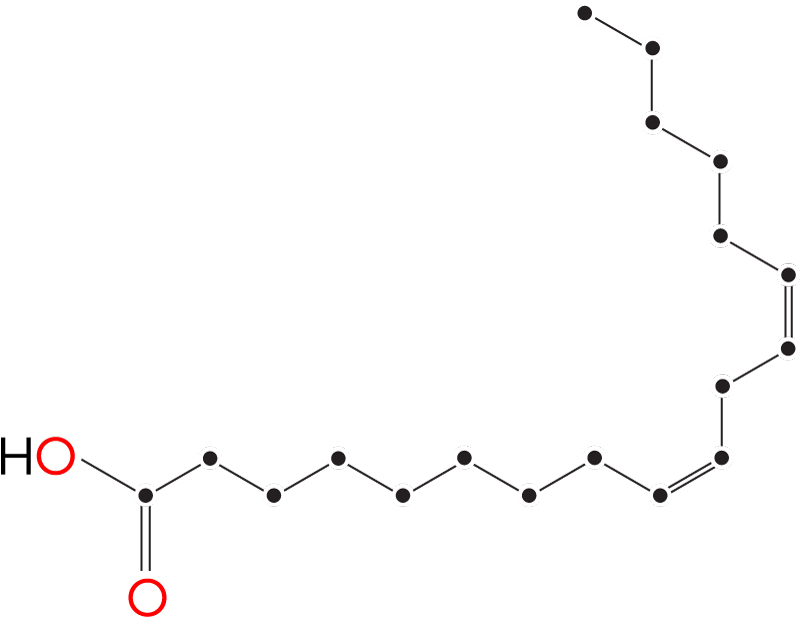
The one characteristic that defines all fats is that they are not soluble in water, regardless of whether they are in the form of solids or liquids (oils). Fats are composed of smaller units called fatty acids (FA). The properties of a specific fat are determined by the composition of these fatty acids. Fatty acids are chains of carbon atoms that may contain single or double bonds. When all bonds are single, the fatty acid is classified as saturated, whereas the presence of one or more double bonds in a fatty acid will classify it as unsaturated. In livestock feed and animal products like milk, fat is typically found in the form of triglycerides which are molecules consisting of three fatty acids attached to a glycerol backbone. Triglycerides are the primary form of lipid stored in animal tissues and the main type of fat in milk (98%) (MacGibbon et al., 2009).
What happens to the fat in the cow?
When fat arrives at the rumen, normally in the form of triglycerides, the glycerol backbone is separated from the fatty acids in a process named hydrolysis. Glycerol groups are used as energy sources for rumen microbes while the fatty acids will go through different processes depending on their length and saturation level. For example, unsaturated FA can be toxic for some rumen bacteria, especially those that ferment fiber. Due to this phenomenon, unsaturated FA goes through a process called biohydrogenation which converts the FA’s double bonds to all single bonds (Maia et al., 2010). If the process goes to completion, the result is a saturated fatty acid. For that reason, many unsaturated fatty acids entering the rumen will leave in the form of stearic fatty acid, which is saturated. On the other hand, saturated FAs do not undergo major changes after hydrolysis (Jenkins et al., 2008).
| INTAKE | OUTFLOW |
|---|---|
| 892 g FA (<10%FFA*) |
876 g FA (>80%FFA) ▲ |
| 0.22% C18:0 |
61% C18:0 ▲ |
| 24.5% C18:1 |
3.42% C18:1 ▼ |
| 49.32% C18:2 |
3.5% C18:2 ▼ |
| 4.14% C18:3 |
0.34% C18:3 ▼ |
After leaving the rumen, the fatty acids are absorbed in the small intestine. From there they travel through the blood to different parts of the body depending on the needs of the cow. When no extra energy is required or excess energy is fed in the diet, fat is stored as adipose tissue (body fat). The cow can pull on these energy reserves when needed (Bauman et al., 1980). In early lactation, for instance, the cow is going through a negative energy balance due to the high energy requirements of milk production and will use fat from body storage for extra energy, leading to body condition loss. Excessive body fat storage can contribute to metabolic issues or poorer reproductive performance.
Together, dietary fatty acids from forages, grains, and byproducts typically amount to roughly 3% of diet dry matter. In general, it is recommended that lactating dairy diets do not exceed 7% of dietary dry matter as fatty acids, and less than 5% for fresh cow rations to minimize the negative impact of higher amounts of fat on rumen fermentation (Jenkins, 1993; Van Soest, 1994). Adding fat to a diet increases energy density and can support milk production, reproductive performance, and improve body condition. On the other hand, feeding excess fat can reduce microbial activity in the rumen, decrease dry matter intake, cause excessive body condition gain, and lead to metabolic diseases and reproductive issues.
When does the cow need more fat?
There are some situations when the cow can benefit from an increase in dietary fat content without dropping intake such as:
- In early lactation to support milk production or mitigate body condition loss.
- High-producing cows to keep up with the energy needs of their high performance.
- During heat stress when cows can reduce their dry matter intake and therefore, they need to obtain more energy per unit of feed consumed.
Types of fat in dairy cow diets
Saturated Fats
In ruminant nutrition, saturated fats are typically found in animal-based sources such as tallow and choice white grease. Saturated fats are typically solid at room temperature. In the rumen, saturated fats remain relatively unchanged, while unsaturated fats are hydrogenated by rumen microorganisms. Some examples of saturated fatty acids are
- Palmitic acid (C16:0) → Commonly used in fat supplements for dairy cattle.
- Stearic acid (C18:0) → Commonly found in animal fats and dominant fatty acid leaving the rumen.
- Myristic acid (C14:0) → Present in smaller amounts in common feeds used in dairy diets.
Unsaturated Fats
In ruminant nutrition, unsaturated fats are typically found in plant-based sources, including vegetable oils and oilseeds. Unsaturated fats are typically liquid at room temperature. In the rumen, unsaturated fats can be toxic to some rumen bacteria and will therefore undergo extensive modification compared to saturated fats. The main process of transformation is known as biohydrogenation. Due to those changes, you can find unsaturated fatty acids in animal tissue too but often in lower portions. Some examples of unsaturated fatty acids are
- Oleic acid (C18:1) → Common in many plant oils.
- Linoleic acid (C18:2) → Abundant in oilseeds such as soybeans.
- Linolenic acid (C18:3) → Common in forages and some oilseeds.
Other ways to classify fat
| Classification Type | Sub-Type | ||
|---|---|---|---|
| Chemically | Saturated: No double bonds between carbons | Unsaturated: one or more double bonds between carbons | |
| Source | Animal fat: tallow, choice white grease | Plant fat: soybean oil, canola oil, corn oil | Byproducts: cottonseed, distiller grains |
| Rumen Behavior | Active: fats that interact with rumen microbes such as free oils and unprotected unsaturated fats | Inert: fats that are protected from rumen interactions such as calcium salts of fatty acids or prilled fatty acids | |
Protected Fats
Protected fats are also known as bypass fats. These fat supplements are typically coated by a substance that protects them from interactions with rumen microbes. The purpose of protecting fatty acids is to avoid biohydrogenation, allowing the fat to remain unchanged for better absorption in the small intestine.
Conclusion
Fat is a key dietary component in dairy nutrition, a source of energy, and plays a critical role in supporting milk production. Understanding what fat is, how it behaves in the rumen, and how much cows require allows for more precise ration formulation. When used appropriately, particularly during periods of high energy demand such as early lactation, fat can help meet energy needs without compromising rumen’s function, ultimately supporting cow performance and productivity.
References
- Feinstein, H. I. (1983). “Average Heat of Combustion and Available Energy of Carbohydrate, Fat and Protein,” Iowa Science Teachers Journal: Vol. 20: No. 2, Article 9. Available at: https://scholarworks.uni.edu/istj/vol20/iss2/9
- MacGibbon, A.K.H., Taylor, M.W. (2006). Composition and Structure of Bovine Milk Lipids. In: Fox, P.F., McSweeney, P.L.H. (eds) Advanced Dairy Chemistry Volume 2 Lipids. Springer, Boston, MA. https://doi.org/10.1007/0-387-28813-9_1
- Maia, M.R., Chaudhary, L.C., Bestwick, C.S. et al. (2010). Toxicity of unsaturated fatty acids to the biohydrogenating ruminal bacterium, Butyrivibrio fibrisolvens. BMC Microbiol 10, 52 (2010). https://doi.org/10.1186/1471-2180-10-52
- T. C. Jenkins, R. J. Wallace, P. J. Moate, E. E. Mosley, BOARD-INVITED REVIEW: Recent advances in biohydrogenation of unsaturated fatty acids within the rumen microbial ecosystem, Journal of Animal Science, Volume 86, Issue 2, February 2008, Pages 397–412, https://doi.org/10.2527/jas.2007-0588
- Bauman, D. E., & Currie, W. B. (1980). Partitioning of nutrients during pregnancy and lactation: A review of mechanisms involving homeostasis and homeorhesis. Journal of Dairy Science, 63(9), 1514–1529. https://doi.org/10.3168/jds.S0022-0302(80)83111-0
- Jenkins, T. C. (2012). Rumen Transformation of Lipids. Virtus Nutrition webinar. Available at: https://www.youtube.com/watch?v=MyO_Raiv14w. Accessed July 1, 2026.
Originally Published: July 2026
Author
- Manuel Peña – University of Wisconsin–Madison, Division of Extension
Reviewers
- Katelyn Goldsmith – University of Wisconsin-Madison, Division of Extension
- Jackie McCarville – University of Wisconsin-Madison, Division of Extension